













Train travel in Vietnam: Complete guide


Train Travel in Vietnam: The complete guide brings together everything you need to plan, ride, and confidently book train journeys across the country. From the legendary Reunification Line linking Hanoi and Ho Chi Minh City to scenic coastal rides between Hue and Da Nang, this guide explains train classes, essential routes, ticket types, and real booking tips. Follow our step‑by‑step advice to compare schedules, secure seats or sleepers, and complete your purchase on our site. You’ll receive your e‑tickets conveniently via email.
Buy Train Tickets
Use the YesMyTrips widget to reserve your Vietnamese train tickets today!
Booking your Vietnamese train tickets in advance with YesMyTrips guarantees you a seat, especially during peak travel periods or holidays, helping you avoid disappointment due to limited availability. It also allows for better trip planning and access to your preferred departure times and seats.
Why Travel by Train in Vietnam?
Train travel in Vietnam offers a practical yet immersive way to explore the country, combining efficiency with authentic Vietnamese scenery, social interaction, and overnight comfort. It's the ideal choice for travelers seeking a balance between affordability, cultural richness, and unique experiences: more spacious and scenic than buses, cheaper and more atmospheric than flights, with opportunities to see rural life and meet locals along the way.
• Scenic Routes That Enhance Your Journey:
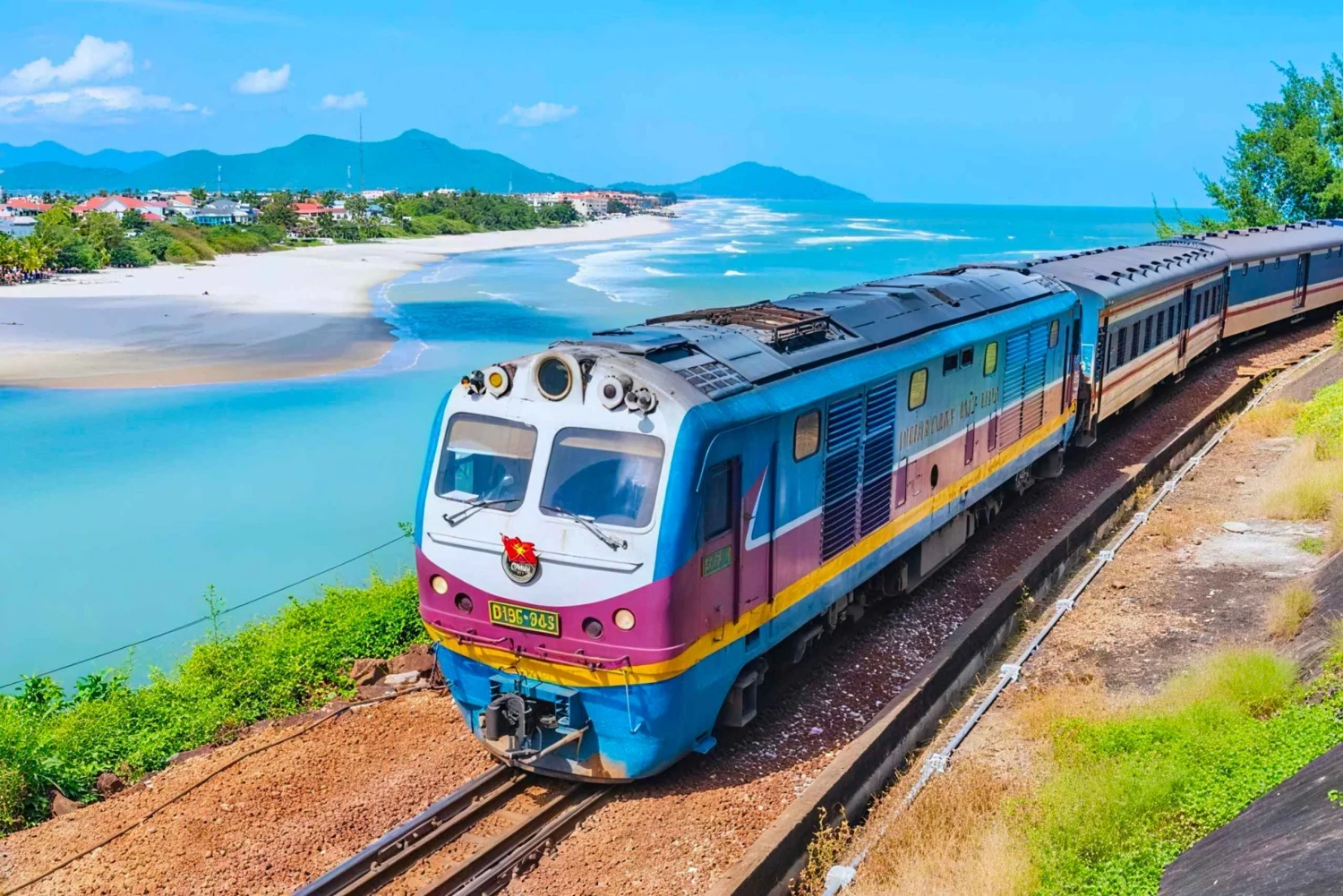
Travel along iconic corridors like Hanoi to Ho Chi Minh City on the Reunification Line, or the short but spectacular stretch over the Hai Van Pass, Hue to Da Nang train tickets and Da Nang to Hue train tickets, to witness rice paddies, coastal cliffs, mountain ranges, and bustling small stations, transforming travel time into sightseeing opportunities.
• Cost-effective and transparent pricing:
Train fares are generally lower than flights and free from dynamic pricing. Train tickets and advance sleeper reservations offer predictable and budget-friendly options, making planning simple and straightforward.
• Comfort for long distances:
Overnight sleeper trains provide comfortable bunks, bedding, and privacy, enabling you to arrive rested and save on hotel costs. During the day, spacious seats, the ability to move around, and dining cars make longer journeys pleasant.
• Local contact and cultural texture:
Trains are lively social spaces where Vietnamese locals and tourists mingle, vendors sell regional snacks at stations, and stops reveal daily life across provinces, adding authentic cultural flavor to your trip.
• Reliable and safe public service:
Operated by Vietnam Railways, train services run on regular schedules across the national network. While not the fastest option, they are dependable and low-risk for long-distance travel.
• Lower environmental impact:
Trains produce significantly fewer CO2 emissions per passenger compared to domestic flights, an eco-conscious choice for sustainable travel.
Ready to experience Vietnam by train?
Book Vietnam train tickets online
YesMyTrips books Vietnam Railways (VR) tickets for routes across Vietnam. The total price, including all fees, is shown before you pay. Your ticket is sent as a PDF by email once our team confirms the booking. Payment by Visa, Mastercard, JCB or American Express card, Apple Pay or Google Pay.
Search trains in VietnamYesMyTrips is a Southeast Asia train booking service founded by Maxence Décamp, a French specialist running train booking operations in the region since 2019. Operated by YES MY TRIPS Co., Ltd. (Vietnam), member of EuroCham Vietnam and CCI France Vietnam.
Overview of Vietnam Railway System
Vietnam’s railway network is a vital transportation backbone, stretching across the country and offering travelers one of the most affordable and scenic ways to explore its diverse landscapes. The system is managed by Vietnam Railways, a state-owned enterprise under the Ministry of Transport. Established after the reunification of North and South Vietnam, it is headquartered in Hanoi.
The network primarily uses a narrow 1,000 mm meter gauge, with a total rail length exceeding 2,600 km as of 2026. The most famous corridor is the Reunification Line, running 1,726 km between Hanoi and Ho Chi Minh City. Other important routes include Hanoi–Lao Cai (gateway to Sapa) and Hue–Da Nang over the Hai Van Pass. The train fleet includes various service levels:
• SE (Super Express): fastest long-distance trains with limited stops.
• Local trains: servicing provincial and regional routes.
Recent investments focus on modernization, including:
• Double tracking projects to improve punctuality.
• Proposed high-speed rail project (Hanoi–Ho Chi Minh City) with phased development planned beyond 2030.
• Urban metro systems under construction in Hanoi and Ho Chi Minh City.
The network is mostly diesel-powered, with electrification limited to urban metro projects. Annually, Vietnam Railways transports over 20 million passengers, serving both local commuters and long-distance travelers. Rail travel remains popular for its cost-effectiveness, scenic views, relaxed pace, and authentic glimpse into Vietnamese rural and urban life. The system is also favored by budget-conscious travelers, students, and low-income citizens due to various discounts and social tariffs.
Traveling by train offers not only a practical mode of transportation but also a relaxing and culturally enriching experience, providing unique windows into the daily life of Vietnam’s people.
Regional Connectivity and Major Lines
Vietnam’s rail network is anchored by the historic Reunification Line, running the full length of the country from Hanoi to Ho Chi Minh City. Branch lines extend to key destinations such as Lao Cai (gateway to Sapa), Hai Phong (port city), Quang Ninh (near Ha Long Bay), and Da Nang, connecting the capital with provincial towns, tourist hubs, and international borders.
Reunification Line
Stretching approximately 1,726 km, this line runs from Hanoi to Ho Chi Minh City. Key stops include Hue, Da Nang, Nha Trang, and Phan Thiet. Known for its scenic coastal and mountain views, the line is Vietnam’s most important transport corridor, symbolizing national unity.

Hanoi–Lao Cai Line
Running overnight from Hanoi to Lao Cai, this line is the gateway to Sapa. Popular with tourists, it passes through Viet Tri, Yen Bai, and Phu Tho, offering mountain scenery and access to northern highlands.

Hanoi–Hai Phong Line
This short line connects Hanoi to the port city of Hai Phong, passing through Hai Duong. It is vital for freight and passenger traffic, linking the capital to northern seaports.

International Stations: Major border crossings include Lao Cai (China), Dong Dang (China), and Mu Gia (Laos), facilitating significant cross-border travel and trade.
Explore Vietnam's regions by train!
Vietnam Railway Stations and What to Expect
Experience at Vietnamese train stations varies from the bustle of major urban hubs to the simplicity of provincial halts. Here’s what to anticipate at different types of stations:
Major Hubs
Hanoi Railway Station
Vietnam’s historic central hub, located in the heart of Hanoi. It features multiple platforms, ticket counters, food stalls, waiting halls, and luggage services. The station connects to buses and taxis, serving most northern and long-distance services.
Features:
• Colonial-era facade with clock tower.
• Easy access to city transport and hotels.

Ho Chi Minh City (Saigon) Station
The southern terminus of the Reunification Line, located in District 3. It offers ticket offices, food vendors, ATMs, and waiting areas. Though smaller than Hanoi Station, it is the main hub for southern routes and long-distance trains.
Features:
• Simple modern building with wide forecourt.
• Taxis and buses readily available.

Regional Key Stations
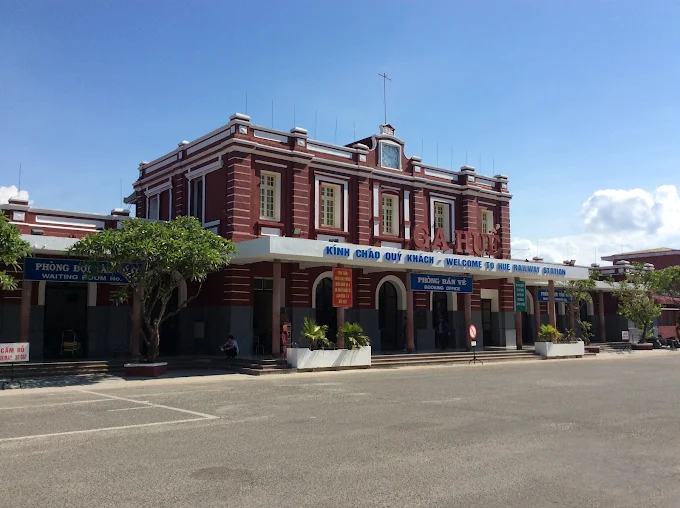
Stations in cities like Hue, Da Nang, Nha Trang, Lao Cai, and Hai Phong feature ticket offices, local food vendors, ATMs, waiting areas, restrooms, and onward transport options such as taxis and buses.
Local and Small Stations
These range from mid-sized intercity stops to rural halts.
• Mid-sized stations often include platforms, shelters, water, and a ticket booth. Many offer food stalls, bathrooms, and covered seating, but hours may be irregular.
• Rural halts may be very basic, sometimes with nothing more than a raised curb.
Major junctions (e.g., Vinh, Dong Hoi) facilitate train connections and generally have more staff. International border stations such as Lao Cai (China) and Dong Dang (China) handle customs and immigration procedures.
Navigating stations:
• Platform numbers are displayed in both Vietnamese and English at major stations.
• Staff are helpful, and security is visible throughout the system, with occasional random checks during peak travel times.
Plan your journey! Book tickets to major or local stations across Vietnam.
Planning Your Travel Itinerary by Train
Creating a rewarding Vietnam rail itinerary involves balancing scenic routes, practical transfers, and connections to buses or ferries for destinations that are less accessible directly by train.
1. Choose Your Route and Timing
Decide whether to travel during the day or overnight. Consider if you prefer direct routes or multi-stop journeys.
• Major lines such as the Reunification Line typically run several daily departures.
• Overnight trains are a good way to save time and accommodation costs while maximizing sightseeing and experience “sleep and travel” efficiency.
2. Plan Multi-Day Journeys
For classic routes like:
• Hanoi–Hue–Da Nang–Hoi An
• Hanoi–Lao Cai–Sapa
• Ho Chi Minh City–Nha Trang–Da Lat
Schedule stops at towns of interest and link legs with well-timed train connections. While connections are usually reliable, it’s wise to leave a buffer of extra time between trains to account for delays.
3. Transfers and Connecting Modes
Stations like Nha Trang and Da Nang are outside certain tourist centers, requiring buses, taxis, or ferries for onward travel to destinations such as Hoi An, Phu Quoc, or Cat Ba Island.
• Combination tickets that bundle train, bus, and ferry segments are available on platforms like YesMyTrips, making planning easier and seamless.
4. High-Demand Travel Periods
During peak times such as Tet (Vietnamese New Year), National Day, or summer holidays, sleeper berths and express train seats sell out quickly.
• Advance booking is essential to secure your preferred accommodations and seats.
5. Check Published Timetables
Train schedules are updated seasonally and are available on platforms like YesMyTrips.
• Always verify departure times, especially when planning multi-leg trips, to ensure smooth connections.

Popular Train Routes in Vietnam
Vietnam’s rail network offers several unmissable journeys, each with practical and touristic appeal.
| Route | Distance | Duration | Key Highlights | Classes Available | |
|---|---|---|---|---|---|
| Hanoi–Ho Chi Minh City | 1,726 km | 30–35 hours | Coastal scenery; mountains; cultural cities (Hue, Da Nang, Nha Trang) | Seat, Soft Seat, Cabin Sleeper 6-Berth, Cabin Sleeper 4-Berth | |
| Hanoi–Lao Cai (Sapa) | 340 km | 8–9 hours (overnight) | Red River valley; terraced rice fields; gateway to Sapa | Cabin Sleeper 4-Berth | |
| Hanoi–Hue | 688 km | 13–14 hours | Imperial citadel; cultural heritage; central Vietnam landscapes | Seat, Soft Seat, Cabin Sleeper 6-Berth, Cabin Sleeper 4-Berth | |
| Hue–Da Nang | 103 km | 2.5–3 hours | Hai Van Pass; coastal cliffs; South China Sea views | Seat, Soft Seat, Cabin Sleeper 6-Berth, Cabin Sleeper 4-Berth | |
| Ho Chi Minh City–Nha Trang | 411 km | 7–9 hours | Beach resorts; coastal scenery; fishing villages | Seat, Soft Seat, Cabin Sleeper 6-Berth, Cabin Sleeper 4-Berth | |
| Hanoi–Hai Phong | 102 km | 2–2.5 hours | Port city; gateway to Cat Ba Island and Ha Long Bay | Seat, Soft Seat |
Notes:
• Sleeper services and air-conditioned berths are especially popular on the longer routes like Hanoi–Ho Chi Minh City, Hanoi–Lao Cai (Sapa), and Hue–Da Nang.
• Trips to Nha Trang and Da Nang are essential for beach and coastal adventures, connecting travelers to seaside resorts and cultural hubs.
• The Hue–Da Nang route offers the iconic Hai Van Pass, one of Asia’s most scenic coastal rail journeys.
• The Hanoi–Lao Cai line is the primary overland route heading towards Sapa and the Chinese border.
Discover the most popular train routes in Vietnam and book your tickets today!
Scenic Train Routes and Experiential Journeys
Vietnam’s railway routes wind through a country blessed with stunning landscapes and rich cultural sights, making some lines among Asia’s most photogenic. Here are two of the most scenic journeys:
Hanoi–Lao Cai (Sapa Line):
Often regarded as Vietnam’s most picturesque train route, this overnight journey passes through terraced rice fields, misty valleys, and mountain landscapes. In the early morning, arriving in Lao Cai reveals tranquil rural villages and breathtaking views of the northern highlands. Highlights include the winding Red River valley and the gateway to Sapa, perfect for photography and trekking adventures.

Hue–Da Nang (Central Line):
This short but spectacular coastal route offers panoramic views of the South China Sea, lush mountains, and the famous Hai Van Pass. Travelers are treated to stunning vistas of beaches, cliffs, and vibrant sunsets. The journey is considered one of the most scenic train rides in Asia, combining cultural heritage in Hue with seaside charm in Da Nang.

Book a scenic train journey and experience Vietnam's beauty!
Types of Trains in Vietnam
SE (Super Express): SE trains are the fastest long‑distance services operated by Vietnam Railways.
• Purpose: Connect major cities with fewer stops and faster journey times along the Reunification Line.
• Typical onboard options: Air‑conditioned soft seats, seats, and soft sleeper berths with bedding in 4‑berth cabins. Overnight services provide reading lamps.
• Where you’ll see them: Hanoi to Ho Chi Minh City, Hanoi to Hue, Hanoi to Da Nang, and other trunk routes.
• Ticketing: Reservations are recommended and often required for sleeper berths. Book early for Tet and holiday periods.
• Who should use them: Travelers who value speed, comfort, and guaranteed seats or berths.
HP (Hai Phong Express): HP trains are fast daytime services linking Hanoi and Hai Phong.
• Purpose: Provide quick connections between the capital and Hai Phong with limited stops.
• Typical onboard options: Air‑conditioned soft seats only, no sleeper berths.
• Where you’ll see them: Hanoi–Hai Phong route, e.g. HP1 (06:00 departure from Hanoi, arriving Hai Phong 08:25).
• Ticketing: Advance booking recommended, especially for morning and evening departures.
• Who should use them: Travelers who want the fastest daytime option between Hanoi and Hai Phong.
LP (Local Passenger): LP trains are slower passenger services on the Hanoi–Hai Phong line.
• Purpose: Serve more intermediate stops along the route, offering flexible travel options.
• Typical onboard options: Air‑conditioned soft seats only.
• Where you’ll see them: Hanoi–Hai Phong route, e.g. LP3 (09:20 departure), LP5 (15:15 departure), LP7 (18:10 departure).
• Ticketing: Seats can usually be booked in advance; fares are slightly lower than HP trains.
• Who should use them: Travelers who don’t mind a longer journey and want more departure time choices.
Classes of Train Seats and Comfort Levels
Understanding seat and berth classes is essential to a comfortable journey, as Vietnam’s trains offer a range of options from soft sleeper cabins to basic seats. Discover the various Vietnamese train classes in detail with YesMyTrips and plan your perfect journey.
| Class Type | Description | Features | Best For | |
|---|---|---|---|---|
| Cabin Sleeper 4-Berth | 4-berth lockable cabins with A/C and bedding | Reading lamps, power outlets, clean linen, privacy, sometimes deluxe tourist options (Victoria, Sapaly) | Couples, families, privacy seekers | |
| Cabin Sleeper 6-Berth | Open-plan 6-berth cabins, A/C or fan, shared space | Basic bedding, curtains, affordable, more social atmosphere | Budget travelers, groups, backpackers | |
| Soft Seat | Reserved reclining seats with A/C | Comfortable for daytime journeys, foldable tables, armrests | Day trippers, short intercity travel | |
| Seat | Basic padded or wooden seats, fans, open windows | Cheapest option, lively atmosphere, classic local experience | Locals, short trips, adventurers |
Amenities and Features:
• Cabin Sleeper 4-Berth cabins typically offer good amenities: bedding, pillows, reading lamps, and lockable doors in 4‑berth compartments.
• Cabin Sleeper 6-Berth cabins are more affordable, with basic bedding and shared space.
• Soft Seat options are air‑conditioned and comfortable for daytime journeys.
• In 2026, many main routes feature modern, clean refurbished carriages, with accessible features and family‑friendly compartments on some trains.
The Basic Experience:
• Seat is the simplest and most social option: wooden or plastic benches, open windows, ceiling fans, and a lively platform environment with local food vendors.
Travelling as a family? You can book a whole private cabin: all 4 berths of one sleeper compartment, behind one door.
Choose your comfort level! Book tickets in your preferred class.
Ticket Booking and Reservations
Booking Vietnamese train tickets has never been easier, especially through YesMyTrips, which offers a seamless, reliable booking experience tailored for travelers.
Where and how to book
• YesMyTrips (recommended): Book your Vietnamese train online for convenience and reliability. Select your train, class, berth, and pay by credit card or e‑wallet. Your confirmation can be printed or stored on your phone.
• At the station: Major hubs like Hanoi and Saigon have staffed counters and some foreigner‑specialized service desks for immediate transactions, especially if you prefer cash. For sleeper trains, prefer advance online booking.
Practical Tips & Key Facts
• Book early: Reserve at least 2–4 weeks in advance for popular sleeper trains and holiday periods such as Tet, as these routes tend to sell out fast.
• Secure premium seats: Soft sleeper cabins and upper/lower berths on routes like Hanoi–Ho Chi Minh City and Hanoi–Lao Cai (Sapa) are in high demand and sell out quickly.
• Same-day tickets: Generally limited to local services or seat options. Availability is not guaranteed for longer routes.
• E-ticket & ID: Carry your e-ticket (on your phone or printed) along with matching photo ID or passport. The name and passport number on the ticket must match your ID.
• Cancellations & changes: Changes are not allowed. Refunds typically require cancellations prior to departure. Check the specific policy when booking.
• Waiting list: Some trains offer a waiting list. On YesMyTrips, click on the bell icon to receive a notification when the train becomes available for booking.
Short checklist before Booking
• Decide your route and class (sleeper vs. seat).
• Book early for overnight or holiday travel.
• Confirm names and passport numbers match your travel documents exactly.
• Save or print e-tickets and payment confirmation screenshots.
• Review cancellation and refund policies before finalizing your payment.
Book your train tickets now! Don't miss out on your preferred travel dates.
Understanding Train Schedules and Timetables
Vietnam’s train numbering system and punctuality patterns may seem complex at first, but are straightforward once familiarized.
Train Numbers and Codes:
• SE (Super Express): SE1–SE10 Limited stops, the fastest long‑distance services.
• Local services: Various codes depending on region, serving provincial and short‑haul routes.
Schedules and Reliability:
• Timetables: Departure and arrival times, journey durations, and stopping patterns are available through YesMyTrips and the official Vietnam Railways platform.
• Seasonal factors: Schedules may be adjusted during peak seasons, especially Tet (Vietnamese New Year), summer holidays, or for special tourist trains.
• Punctuality: Generally reliable for SE trains, though delays of 30 minutes to several hours can occur due to single‑tracking, weather, or mechanical issues.
• Rural and scenic trains: Frequencies and schedules may vary, so check online or ask station staff for the latest info.
Additional Tips:
• Printed schedules: Available at main stations like Hanoi and Saigon, often in English for popular routes.
• Smaller stations: Check online or with staff at provincial stations for train frequency and timetable updates.
Night Trains and Sleeper Services
Vietnam’s night trains are a travel highlight, blending efficiency, adventure, and a glimpse into Vietnamese social life on the move.
Popular Night Train Routes
• Hanoi–Ho Chi Minh City: Multiple nightly sleeper trains on the Reunification Line, ranging from modern refurbished carriages to older stock, offering soft and hard sleeper options.
• Hanoi–Lao Cai (Sapa): Popular with trekkers and tourists heading to the northern highlands; several overnight trains featuring soft sleeper cabins operated by Vietnam Railways and private tourist companies.
• Hue–Da Nang: Though shorter, this route can be taken as an evening journey, offering spectacular views of the Hai Van Pass.
• Ho Chi Minh City–Nha Trang: Overnight services connecting the southern metropolis with Vietnam’s beach capital, favored by both locals and tourists.
Cabin Types and Booking Tips
• Cabin Sleeper 4-Berth: Four‑berth lockable cabins with A/C, bedding, and pillows. Some tourist trains offer deluxe cabins with improved amenities.
• Cabin Sleeper 6-Berth: Six‑berth cabins, more affordable but less private, with basic bedding.
• Soft Seat: Comfortable air‑conditioned seats suitable for shorter overnight journeys.
• Seat: Not typically recommended for overnight travel due to limited comfort, but available for budget travelers willing to rough it.
How to Sleep Comfortably
• Book early, especially for lower berths, which are wider, have windows, and are easier to access.
• Bring: Eye masks and earplugs (carriage lights may stay on all night), a light sweater or blanket (A/C can be cold).
• Security: Trains are patrolled by staff. Keep valuables secure, use small padlocks, and keep luggage within sight while sleeping.
• Onboard Dining: Most sleeper trains have dining cars offering basic Vietnamese meals and breakfast. Food carts circulate throughout the night.
Baggage Policy and Practical Onboard Rules
Luggage allowances on Vietnam Railways is set at 20kg per passenger. In practice, enforcement is flexible, but travelers are advised to keep baggage manageable, secure, and comfortable to handle during the journey.
| Class | Official Allowance per Passenger (kg/lbs) | |
|---|---|---|
| Seat | 20kg / 44lbs | |
| Soft Seat | 20kg / 44lbs | |
| Cabin Sleeper 6-Berth | 20kg / 44lbs | |
| Cabin Sleeper 4-Berth | 20kg / 44lbs |
Practical Tips:
• Bulky Items: Bicycles are permitted on some trains if space allows; check ahead. Expect to purchase a freight ticket. Large suitcases can be cumbersome in narrow corridors.
• Luggage Storage: Use locks or cable ties to secure luggage on racks. Keep valuables with you or sleep next to your bag.
• Food and Drinks: Allowed and encouraged. Vendors board at stations, or bring your own supplies. Alcohol sales are restricted on trains but may be available at stations.
• Smoking: Strictly prohibited aboard all trains.
• Mobile Connectivity: Signal quality can be patchy, especially in remote or mountainous areas. Power outlets are available in newer carriages.
• Pets: Allowed in certain classes and cargo, provided they are caged and registered in advance.
• Behavior & Quiet Zones: Respect quiet zones during night hours; maintain a respectful silence for fellow travelers. Daytime is generally more social.
Train Safety Tips and Local Culture Experience
Personal and Property Safety
• Valuables: Always keep valuables locked or within your sight. Use cable locks on bags, and carry essentials like wallet, passport, and phone on your person, especially during night travel or when sleeping.
• Onboard: Vietnam Railways staff are present, especially on busy routes and at night. Serious crime is rare, but petty theft, such as unattended bags, can happen.
• Health & Hygiene: Carry snacks and bottled water to stay hydrated. Train toilets are generally clean, but bringing your own toilet paper and sanitizer is advisable.
Embracing the Cultural Experience
• Onboard Life: Vietnamese trains are social environments, especially in seat and cabin 6-berth classes. Sharing snacks, chatting with fellow travelers, and observing customs, such as offering tea or polite greetings, enhance your journey.
• Dining: Sample local dishes from vendors at stops. Each region features its own specialties, turning train journeys into food adventures.
• Interaction: Station and train staff are often helpful; in major stations, basic English is usually spoken.
• Local Sights: Many stations feature markets, riverside scenery, pagodas, and impromptu performances, adding to the cultural charm. Special excursion trains (e.g., Hanoi–Hai Phong or heritage routes) offer deeper cultural immersion.
Tips for Enjoying the Railway Experience
• Be Polite & Flexible: Delays are common, but they offer more time to observe and mingle with locals.
• Learn Basic Vietnamese: Simple greetings and smiles go a long way in making connections.
• Enjoy the Unexpected: Appreciate spontaneous moments—like a vendor’s story, scenic sunrises, or local performances—as part of the adventure.
Final Takeaways
Train travel in Vietnam offers a practical, affordable, and culturally rich way to explore the country. Whether riding a plush overnight sleeper, hopping a daytime local train to a bustling provincial town, or crossing scenic coastal passes and tunnels, the journey truly becomes part of the destination. With thoughtful planning, flexibility, and these actionable tips, travelers of all backgrounds will find the railway an unforgettable way to experience the heart of Vietnam.
| Feature | Details | |
|---|---|---|
| Operator | Vietnam Railways under Ministry of Transport | |
| Network | Approximately 2,600 km, centered on the Reunification Line | |
| Key Hubs | Hanoi, Ho Chi Minh City (Saigon), Hue, Da Nang, Lao Cai | |
| Main Seat Classes | Seat, Soft Seat, Cabin Sleeper 6-Berth, Cabin Sleeper 4-Berth | |
| Booking | Online via YesMyTrips, at major stations | |
| Timetables/Delays | Generally reliable; delays can occur on single-track sections; schedules may vary seasonally | |
| Night Trains | Available on all major routes, especially popular Hanoi–Ho Chi Minh City and Hanoi–Sapa | |
| Luggage Policy | Official allowances: 20kg; enforcement is relaxed; mobility is key | |
| Onboard Food | Dining cars and carts on long routes; vendors at smaller stops | |
| Safety | Generally excellent; staff present, rare crime incidents | |
| Cultural Experience | Local vendors, markets, spontaneous conversations, and warm Vietnamese hospitality |
Frequently Asked Questions
Yes! The easiest way is through YesMyTrips.com, which offers a secure, user-friendly platform to browse routes, select classes, and book tickets in advance. You can also purchase tickets at train stations but online booking provides confirmation by email and seat selection.
Most major credit and debit cards are accepted on YesMyTrips.com, making it convenient for travelers worldwide. You can also use popular e-wallets like Apple Pay or Google Pay.
You can book tickets up to 44 days ahead on YesMyTrips.com (tickets for any travel date up to February 25, 2027 can currently be booked already), especially for popular sleeper train routes such as Hanoi–Ho Chi Minh City or Hanoi–Sapa. Options include soft and hard sleepers, soft seats, and seats.
Vietnam trains offer Soft Sleeper cabins (4-berth, A/C), Hard Sleeper cabins (6-berth), Soft Seats (A/C), and Seats. Check YesMyTrips.com for availability.
SE (Super Express) trains are the fastest with limited stops and more amenities, HP (Hai Phong Express) trains provide quick daytime connections between Hanoi and Hai Phong, while LP (Local Passenger) trains are slower services on the same route with more intermediate stops.
Popular routes include Hanoi–Ho Chi Minh City (Reunification Line), Hanoi–Lao Cai (for Sapa), and Hue–Da Nang (Hai Van Pass). You can check schedules and scenic options through YesMyTrips.com.
Prices depend on route and class. Short routes like Hanoi–Ninh Binh start from 122,000 VND. Medium routes like Ho Chi Minh–Phan Thiet start from 210,000 VND. Longer routes like Hanoi–Sapa start from 290,000 VND and Ho Chi Minh–Nha Trang from 300,000 VND. Full-length routes like Ho Chi Minh–Hue start from 500,000 VND. Cabin 4-berth sleepers are priced higher than seats. Book on YesMyTrips.com to see live fares for your exact route.
Sleepers are designed for comfort, with bedding, linen and air conditioning. Some trains also have toilets or dining cars, and tourist operators on the Hanoi–Sapa route offer upgraded cabins.
Dining cars and carts serve meals and snacks on long routes. You can also bring your own food and drinks, but alcohol sales are limited to stations.
Related Articles

 How to Book Vietnam Train Tickets
Check out our full guide to booking train tickets in Vietnam in 2026!
 Vietnam Train Routes, Prices & Timetable
Compare fares and full timetables for every major Vietnam route, then book directly.
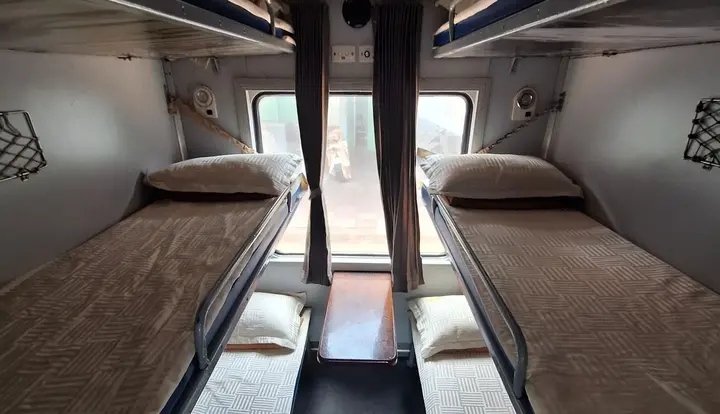 Vietnam Sleeper Trains
Compare overnight sleeper routes, live fares and cabins, and book your berth online.
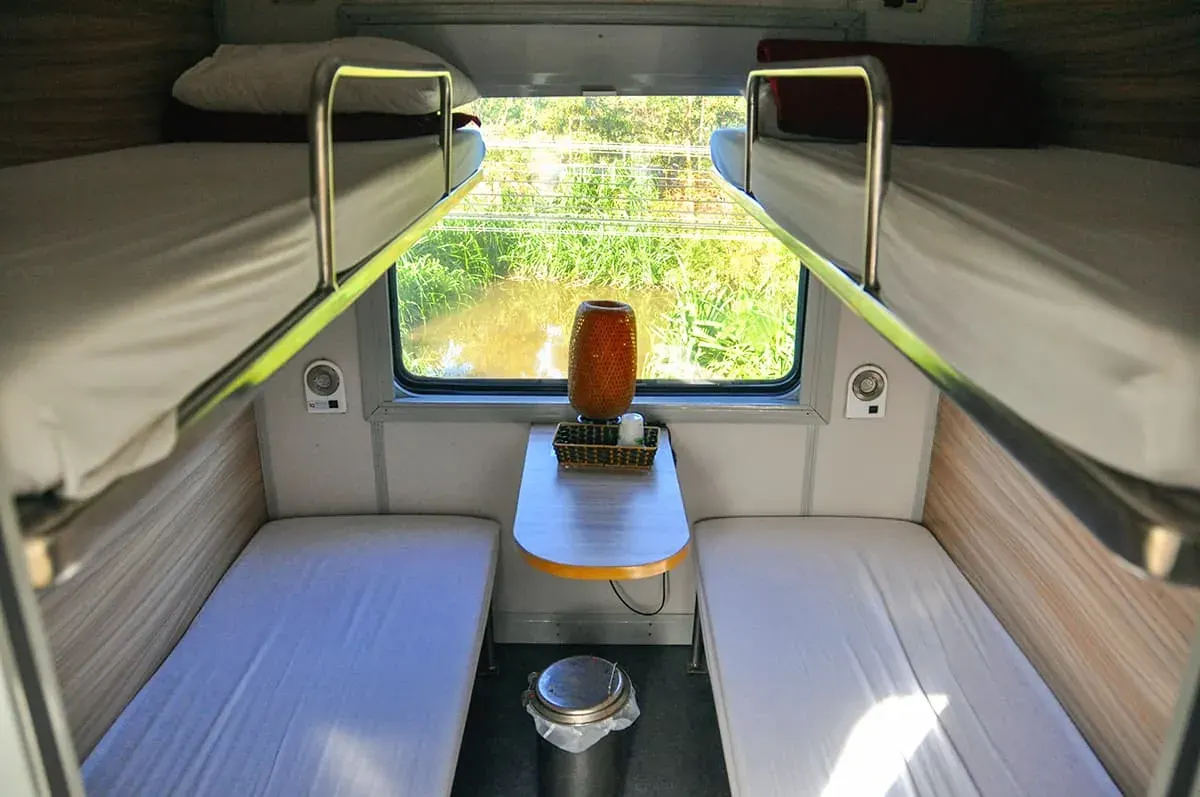 Family Cabin on Vietnam Sleeper Trains
Book all 4 berths of one cabin so your family travels behind one door, with tips for the night.
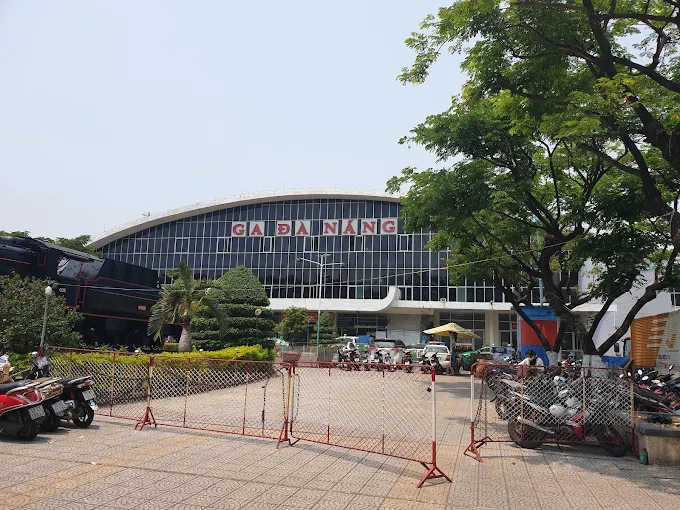 Da Nang to Hue Train
Cross the Hai Van Pass in under three hours, with live schedules and seat side tips.
 Hoa Phuong Do Luxury Train
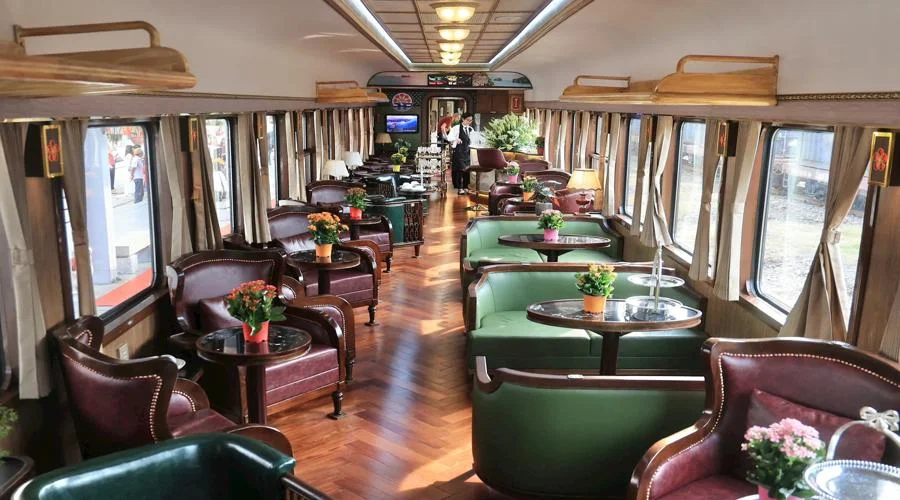
Ride the Salon Club Class VIP carriage from Hanoi to Hai Phong, with live times and fares.
 VR Ticket Booking Window
Check if booking is open for your date, live, with a countdown and free email alerts.