





10 Costly Mistakes Tourists Make When Booking Train Tickets in Thailand
Most travelers lose time, money, or miss their train because of these mistakes, especially during busy periods.


Every week, travelers contact us confused, stressed, or disappointed because their train is “sold out” or their booking didn’t work as expected. The problem isn’t bad luck, it’s that train booking in Thailand works very differently from what most travelers assume.
1. Waiting for the official website to work
What travelers expect:
“If I keep refreshing the official railway website, availability will eventually appear.”
What actually happens:
Official booking system is often unstable, slow to update, or temporarily unavailable, especially during high demand periods.
It’s common for the official website to:
• fail to load or timeout.
• show incomplete results.
• temporarily block searches.
• display outdated availability.
In many cases, while you keep refreshing the page, your session has already been destroyed in the background. This means you are repeatedly seeing the same cached or outdated data, without the system actually running a new availability search.
Why this causes problems:
While travelers wait for the system to respond or update, popular trains continue to sell through other channels or at stations.
By the time availability appears, the most convenient departures, especially sleeper trains, are often already gone.
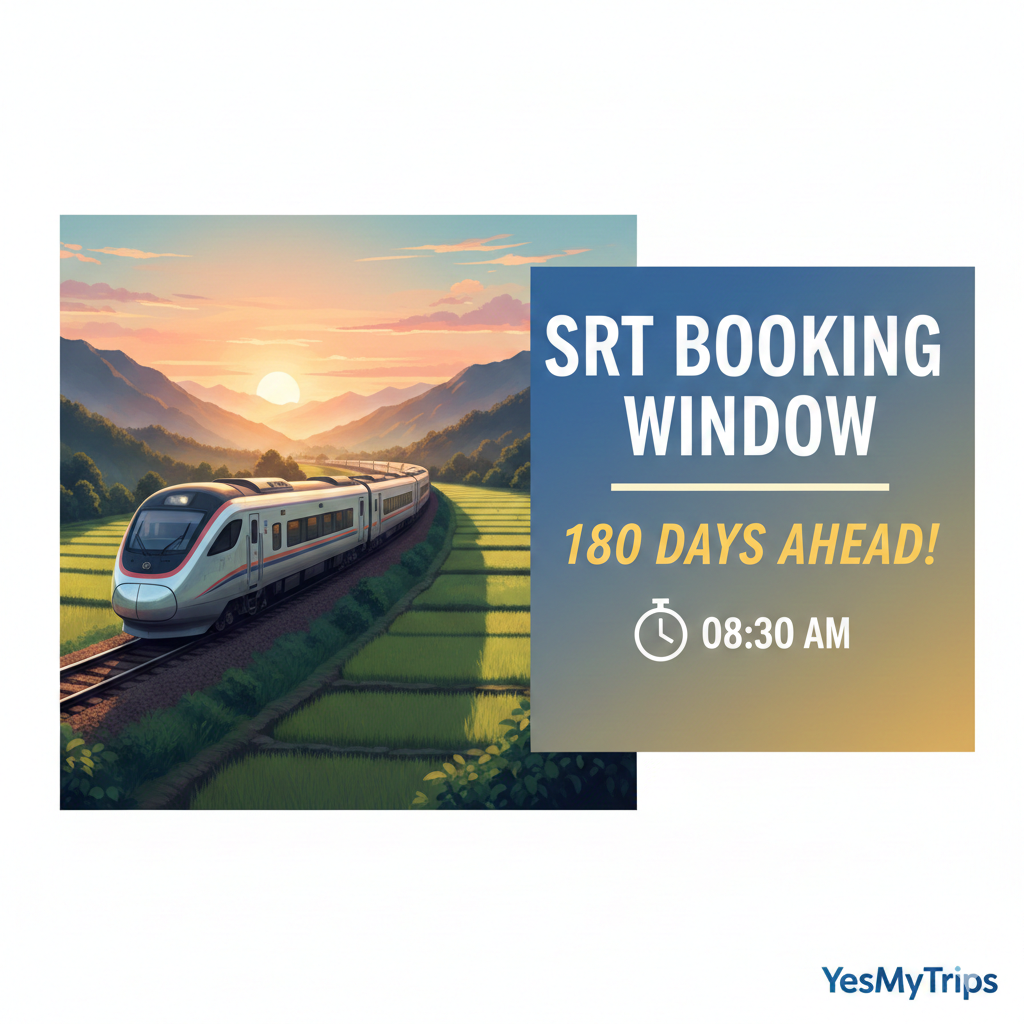
🔔 Pro-Tip: Don't guess your booking date. Use our Live SRT Countdown Tool to see exactly when seats for your travel date become available.
2. Assuming booking early guarantees a seat
Reality:
Train seats are released in stages, and availability depends on both the route length and the booking channel, not just how early you search.
A train that cannot be booked online is often not sold out. In many cases, booking for that specific journey segment has simply not opened yet.
For long-distance routes (for example, Bangkok to Chiang Mai), online booking usually opens up to 90 days in advance.
For shorter segments on the same long-distance trains:
• Trips covering 25%–59% of the full route open 30 days ahead
• Trips covering less than 25% of the full route open only 1 day ahead
Additionally, some seats are released first at physical station counters and only later made available online. When online booking finally opens, those seats may already be gone due to earlier station sales, creating the impression the train was "sold out."
Why it costs you:
Travelers assume they missed their chance and panic-book buses or flights they didn’t want or need.
3. Searching with the wrong passenger setup
What many travelers don’t realize:
The number of passengers entered during a search can influence which parts of a train are displayed.
Reality:
Train availability is often organized at the carriage level, not shown as a simple train-wide total.
What this leads to:
• a search may display a carriage with very limited remaining seats.
• travelers assume the train cannot accommodate their group.
• other carriages with sufficient space may not be visible under that search context.
This behavior is particularly common for:
• sleeper cabins.
• grouped berths.
• family or group travel.
Why this causes problems:
Because availability is fragmented across carriages, travelers often:
• misinterpret what they are seeing.
• believe suitable options do not exist.
• abandon a route that could, in reality, accommodate them.
The confusion comes from how availability is presented, not necessarily from a lack of space on the train.
4. Believing “sold out” is final
What many travelers assume:
“If the system says SOLD OUT, there are no seats left.”
Reality:
In this booking system, seats and berths can be temporarily reserved while other users are in the process of completing a booking. During this holding period, availability may appear as SOLD OUT even though those seats are not yet confirmed.
If a booking is not completed, which happens frequently, the held seats are eventually released back into the system.
What this leads to:
• availability that appears and disappears without explanation.
• travelers seeing contradictory results within short timeframes.
• uncertainty about whether a train is truly full or temporarily unavailable.
An additional source of confusion:
Some booking attempts fail late in the process, after seats appear selectable, due to technical or system limitations.
When this happens, travelers often interpret the failure as a genuine sell-out, even though availability may still exist.
Why this causes problems:
Because availability signals are unreliable, travelers often abandon trains too quickly and switch to alternative transport that may not have been necessary.
5. Booking the wrong class for long journeys
What many travelers assume:
“A seat is fine, it’s just a train ride.”
Reality:
On routes lasting 10 to 12 hours (or more), the difference between a second-class seat and a sleeper berth is huge.
Seats are designed for shorter daytime trips. On overnight or long routes, travelers often:
• struggle to sleep upright
• wake up repeatedly
• arrive exhausted the next morning
Sleepers, on the other hand, allow you to lie down, rest properly, and arrive ready to continue your trip.
Why it costs you:
Trying to save a small amount of money often leads to:
• exhaustion the next day
• missed plans or activities
• needing an extra hotel night to recover
Many travelers later say they would gladly pay more just to arrive rested.
6. Waiting until you arrive in Thailand
What many travelers assume:
“I’ll book my train tickets once I’m in Thailand, it’ll be easier.”
Reality:
Train travel in Thailand is not a tourist activity, it’s a core part of how locals travel.
Thai trains are heavily used by:
• families visiting relatives
• workers commuting between provinces
• students and locals traveling for holidays
This means a large portion of tickets is booked by locals, often well before tourists even start checking.
During peak season, holidays, and weekends, walk-in availability at stations becomes very limited, especially for popular routes and sleeper trains.
By the time many travelers arrive:
• convenient departures are already gone
• sleeper berths are fully booked
• station staff may only offer uncomfortable or indirect alternatives
Why it costs you:
Waiting often forces travelers into:
• last-minute buses or flights
• long journeys in second-class seats instead of sleepers
• changing travel dates or routes they didn’t plan for
What was meant to be a relaxed trip quickly turns stressful, and more expensive.
7. Trusting outdated blog posts and forums
What many travelers do:
They rely on blog posts, Reddit threads, or forum answers written years ago.
Reality:
Train rules, quotas, schedules, and booking systems in Thailand change regularly.
Information that was correct:
• 2–3 years ago
• before recent system upgrades
• before post-COVID demand changes
…may no longer apply today.
Common examples include:
• incorrect booking windows
• outdated rules about sleeper availability
• wrong assumptions about station vs online sales
• routes or classes that no longer exist
Why it costs you:
Following outdated advice often leads to:
• searching for trains that can no longer be booked
• missing real availability that is open
• assuming something is “impossible” when it actually isn’t
Travelers waste time, panic, and sometimes give up, even though valid options were available.
8. Only checking one departure time
What many travelers do:
They search once, see “sold out,” and assume the entire day is unavailable.
Reality:
Availability can differ dramatically between morning, afternoon, and night trains, even on the same route.
It’s very common that:
• night sleeper trains sell out first
• afternoon departures still have seats
• early-morning trains reopen availability later
Some trains may look unavailable while others, just a few hours apart, still have perfectly good options.
Why it costs you:
By checking only one departure time, travelers often:
• miss comfortable alternatives
• assume they must change travel dates
• book buses or flights unnecessarily
In many cases, a small shift in departure time solves the problem completely.
9. Not checking nearby dates
What many travelers assume:
“If my date is sold out, there are no options.”
Reality:
Moving your trip by just one day earlier or later can completely change availability.
This happens because:
• ticket releases are staggered
• demand peaks on specific days
• cancellations and expired holds reopen inventory
A date that looks impossible today may have multiple options just 24 hours apart.
Why it costs you:
By locking yourself into one fixed date, travelers often:
• overpay for flights or private transport
• book uncomfortable alternatives
• experience unnecessary stress and last-minute changes
In many cases, flexibility of one single day is all it takes.
10. Not having a backup plan
What many travelers assume:
“If my first choice doesn’t work, I’ll figure something out later.”
Reality:
Trains in Thailand are popular and capacity is limited, especially for sleepers and long-distance routes.
Smart travelers don’t rely on a single option.
They check alternatives early, such as:
• nearby departure times
• adjacent travel dates
• different train classes
• secondary routes
Having options doesn’t mean you’ll use them, it means you won’t panic if Plan A disappears.
Why it costs you:
Without a backup plan, travelers often make:
• rushed, expensive bookings
• uncomfortable travel choices
• decisions they regret later
Pressure leads to bad decisions, preparation prevents them.
To reduce uncertainty and see what options are currently open, you can check your route with real-time availability.
I booked a sleeper train from Chiang Mai to Bangkok during my trip to Thailand. As a solo female traveler, I was a bit nervous at first, but I was able to reserve a women-only cabin through Yesmytrips, which made me feel safe and comfortable throughout the journey. Everything went smoothly! I highly recommend their service for solo travelling women.
Siri St. Louis, USThe booking process was easy, information are clear and process was smooth. Great support, our train was delayed and my wife and I were a bit stressed about it, we contact the support and they replied almost instantly giving us explanation, telling us what to do and keeping us updated.
Garry Oldom, DEFrequently Asked Questions
Seats and berths are often temporarily held while other users are completing their booking. If the booking is not completed, which happens far more often than most travelers realize, those seats are usually released back into the system, often every 15 to 30 minutes.
No. Not open online only means tickets are not available for online booking. Some seats may still be sold at stations, which is why it’s common to see trains appear online and already partially sold out.
rain availability is often managed per carriage, not per train. Changing the passenger count can reveal different carriages that were invisible in another search.
In most cases, yes, especially during peak season, holidays, and weekends. Train travel is a core part of Thai daily life, and a large number of tickets are booked by locals well in advance.
It depends on the route and season, but popular routes and sleeper trains can sell out days or even weeks ahead. Checking availability early gives you more options and flexibility.
Night trains are popular, but they’re not always the only good choice. In some cases, afternoon or early-morning trains have better availability and can be just as comfortable.
Yes. Shifting your trip by one day earlier or later often unlocks availability that doesn’t exist on your original date.
Train rules, quotas, and booking systems change regularly. Advice that was accurate a few years ago may no longer apply today.
Check availability early, stay flexible with times and dates, and always look at multiple options before deciding. Planning ahead doesn’t remove flexibility, it prevents stress.