Train travel in Thailand: Complete guide

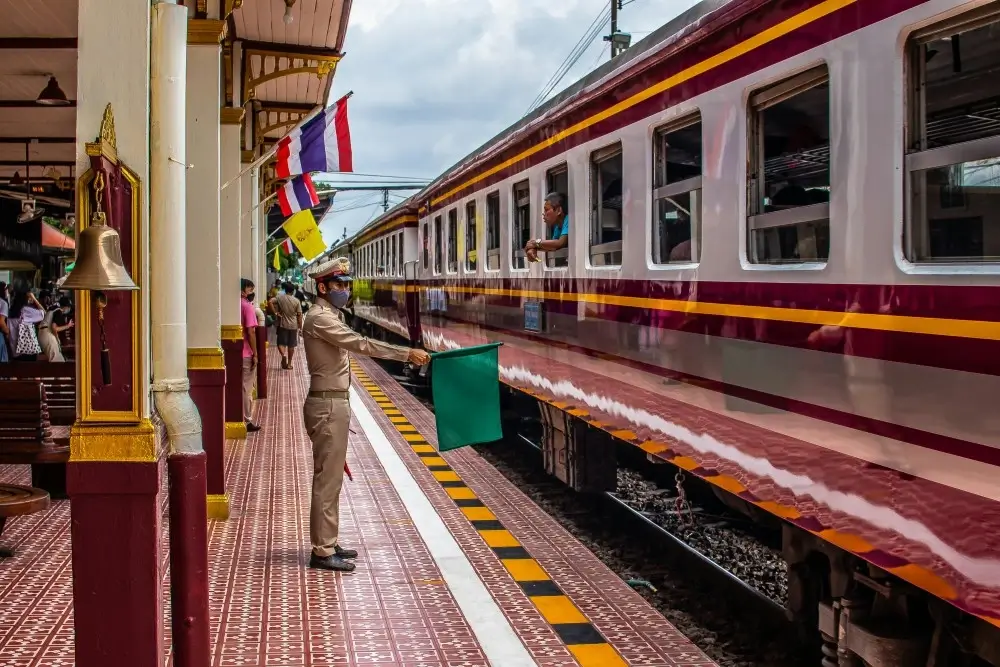
Train travel in Thailand is an affordable and scenic way to move around the country, but the booking process and ticket rules can be confusing for first-time travelers. This complete guide explains how Thailand’s railway system works, including train routes, seat and sleeper classes, ticket types and costly mistakes to avoid when booking train tickets in Thailand. From short commuter trips around Bangkok to overnight sleeper trains between Bangkok and Chiang Mai, this page provides clear, factual information to help travelers understand what to expect before booking and boarding a train in Thailand.
Experience Thailand with total peace of mind by using our YesMyTrips Ladies-Only carriage feature to secure your berth in a dedicated, female-only sleeper car.Verified 2026 SRT Schedule Update
Notice: As of March 2026, YesMyTrips has manually verified these schedules against the State Railway of Thailand (SRT) master timetable.
Most travel platforms and search results are currently displaying outdated 2024/2025 data.
The times listed below are the correct, updated departures for the 2026 season.
Why Travel by Train in Thailand?
Train travel in Thailand is a widely used mode of transport for both locals and visitors, offering an affordable and scenic way to move across the country. Trains combine practical long-distance connectivity with opportunities to experience Thailand’s landscapes, regional towns, and everyday life along the rail network.
• Scenic railway routes:
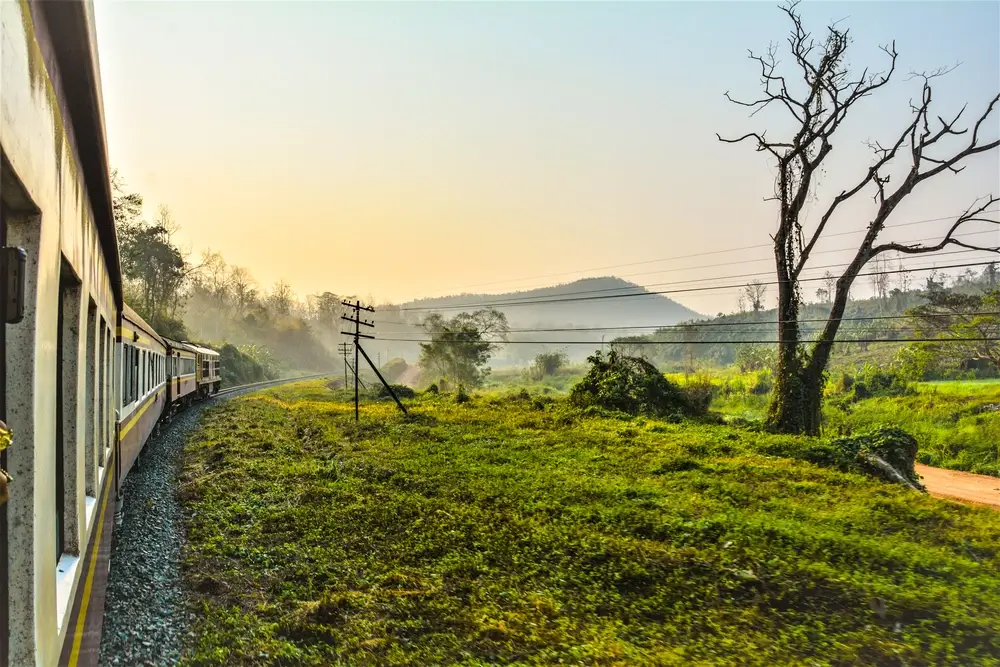
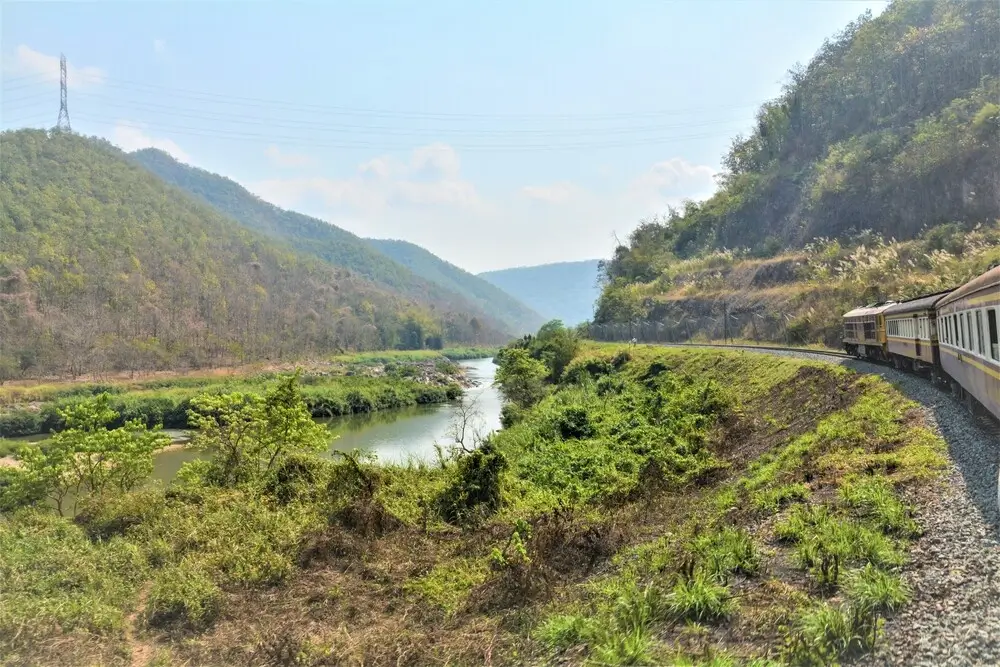
Several Thai train routes pass through rural countryside, forested hills, coastal areas, and small provincial towns. Popular corridors such as the Bangkok to Chiang Mai line and the Southern Line are known for offering views that are not visible from highways or airports.
• Predictable and affordable fares:
Train ticket prices in Thailand are generally fixed by class and distance rather than dynamic pricing. This makes fares easier to anticipate compared to domestic flights, particularly for long-distance and overnight sleeper services.
• Comfort on long journeys:
For overnight travel, sleeper trains provide bunk beds, bedding, and assigned spaces, allowing passengers to rest during the journey. On daytime services, wide seats, open carriages, and onboard food options contribute to a relaxed travel experience.
• Daily life and local interaction:
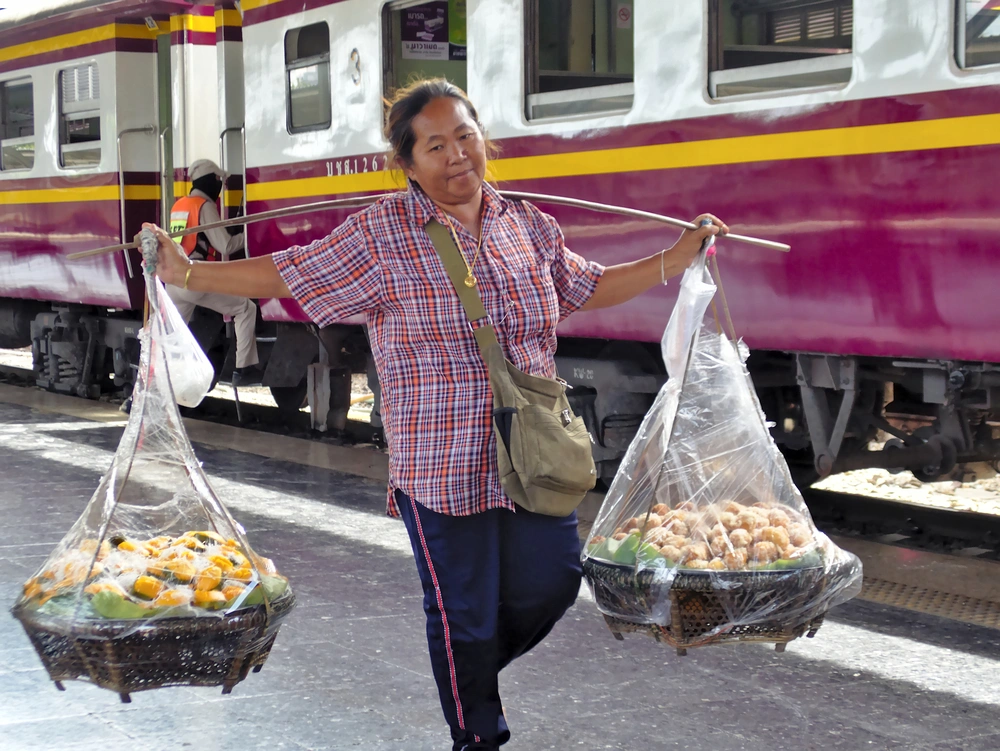
Thai trains are shared spaces used by commuters, families, and travelers. Station stops often include local vendors selling snacks and drinks, while longer journeys pass through towns and villages that reflect regional lifestyles.
• Established and safe public service:
Train operations are managed by the State Railway of Thailand. While services are generally slower than flights, they are considered a stable and low-risk option for long-distance travel within the country.
• Lower environmental impact:
Rail travel produces significantly fewer carbon emissions per passenger than domestic air travel, making trains a more sustainable option for travelers concerned about environmental impact.
Overview of Thailand Railway System
Thailand’s railway system is a nationwide transport network that connects major cities, regional centers, and rural areas across the country. It is operated by the State Railway of Thailand (SRT), a state-owned enterprise under the Ministry of Transport. Founded in 1890 as the Royal State Railways of Siam, the organization adopted its current name in 1951 and is headquartered in Bangkok.
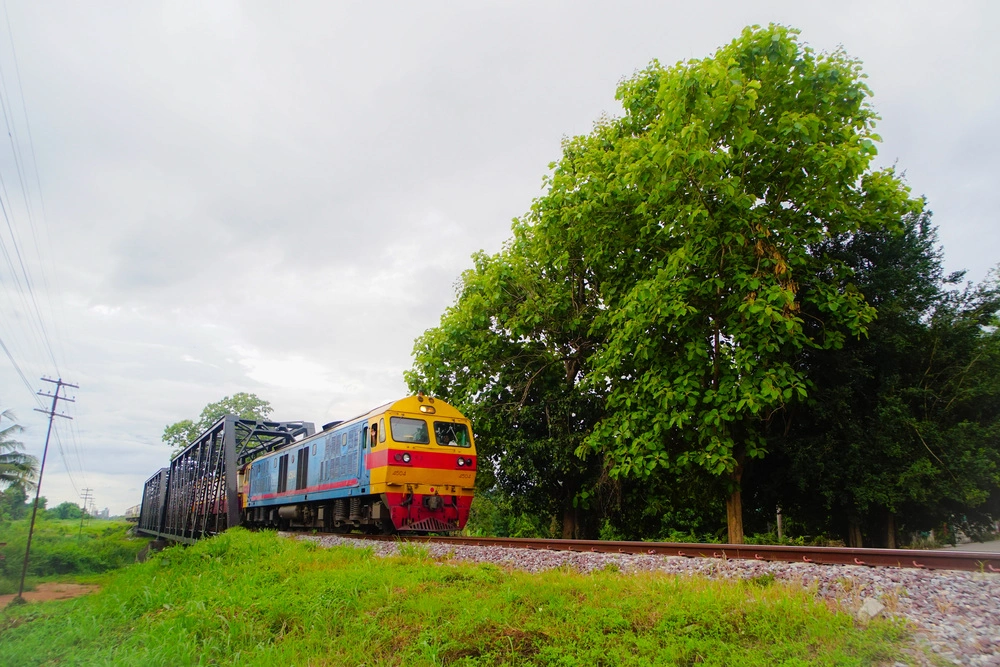
The railway network uses a 1,000 mm meter-gauge track and extends for more than 4,400 kilometers as of 2026. Rail services reach over 90% of Thailand’s provinces, providing both long-distance and regional connections. Several major routes now include double or triple tracking, which improves capacity and service reliability.
Passenger services are categorized by speed and comfort level:
• Special Express: limited stops and the fastest services.
• Express, Rapid, and Ordinary: progressively slower services with increasing numbers of stops.
• Commuter trains: primarily operating in and around Bangkok.
• Local trains: serving short-distance provincial routes.
Recent infrastructure projects focus on network modernization, including:
• Double-track expansion to reduce delays and increase capacity.
• High-speed rail developments, including the Bangkok–Nong Khai and Thailand–China rail corridor, with phased completion planned after 2027.
• Urban rail and airport connections within the Bangkok metropolitan area.
Most long-distance trains are diesel-powered, with electrification currently limited to urban and airport-linked lines. Each year, SRT carries more than 35 million passengers, including daily commuters and long-distance travelers. Rail travel remains an important transport option due to its affordability, wide geographic coverage, and accessibility for different income groups through discounted fares and social pricing schemes.
For travelers, Thailand’s railway system offers a practical way to move across the country while providing insight into regional geography and everyday life along the rail corridors.
Regional Connectivity and Major Lines
Thailand’s rail network centers around four main lines: Northern, Northeastern, Eastern, and Southern plus the independent Maeklong Railway. Each originates from Bangkok, connecting the capital with key cities, provincial towns, and international borders.
Northern Line
Stretching approximately 751 km, this line runs from Bangkok’s Krung Thep Aphiwat Central Terminal to Chiang Mai. Key stops include Ayutthaya, Lopburi, Nakhon Sawan, Phitsanulok, Lampang, and Lamphun. Known for its scenic beauty and cultural sites, there’s a branch diverging to Sawankhalok, and a new branch to the Lao border at Chiang Khong is under construction, enhancing regional links with Laos and China.
Northeastern Line
At Ban Phachi Junction, the line splits:
• One branch heads to Nong Khai (bordered with Laos), passing through Nakhon Ratchasima, Khon Kaen, and Udon Thani.
• The other covers Ubon Ratchathani, moving through Buriram and Surin.
International trains now extend to Khamsavath in Vientiane, Laos, reflecting growing regional integration.
Eastern Line
This route connects to Chonburi, Pattaya, Aranyaprathet (bordering Cambodia), Ban Phlu Ta Luang, and ports like Laem Chabang and Map Ta Phut. It mainly serves regional traffic but also links to Cambodia and the Eastern Economic Corridor.
Southern Line
Over 1,150 km, this vital line runs south from Bangkok to Nakhon Pathom, Hua Hin, Surat Thani, Hat Yai, and terminates either at Su-ngai Kolok (Malaysian border, east coast) or Padang Besar (Malaysian border, west coast). Branches connect to Trang, Kantang, and Nakhon Si Thammarat.
International Stations: Major border crossings include Padang Besar (Malaysia), Nong Khai (Laos), Aranyaprathet (Cambodia), and Su-ngai Kolok (Malaysia), facilitating significant cross-border travel.
Thai Railway Stations and What to Expect
Experience at Thai train stations varies from the grandeur of modern megahubs to the rustic simplicity of rural halts. Here’s what to anticipate at different types of stations:
Major Hubs
Krung Thep Aphiwat (Bang Sue) Station
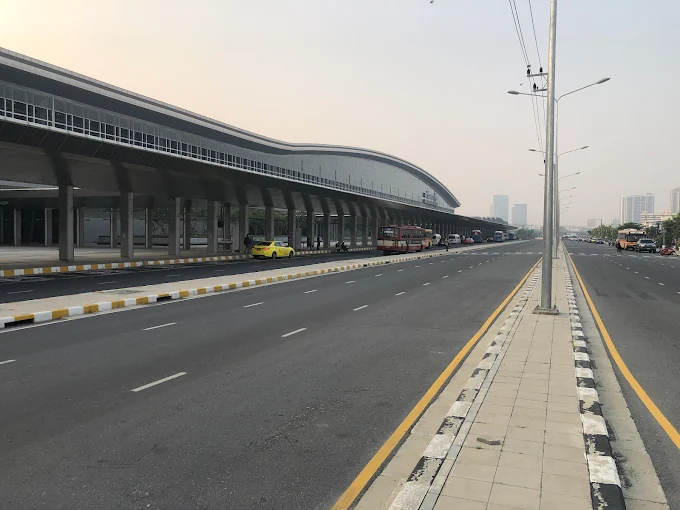
Bangkok’s state-of-the-art rail hub since 2023, featuring 12 platforms, modern facilities, numerous ticket counters, food outlets, left-luggage services, clear signage, and air-conditioned waiting areas. It offers seamless connections to city bus lines and the MRT subway. All major northern, northeastern, and southern services depart from here.
Features:
• Wide road beside the station with curved roof and glass facade.
• Taxis and buses readily available.
Bangkok Hua Lamphong:
The historic main station from the royal era, still atmospheric but now primarily serving short-haul and commuter trains. It has a dedicated ticket office for foreigners, a food court, and luggage storage.
Features:
• Illuminated architecture with fountain in the foreground.

Regional Key Stations
Stations in cities like Chiang Mai, Hat Yai, Surat Thani, Nakhon Ratchasima, Ubon Ratchathani, and Nong Khai feature ticket offices, basic shops, local food vendors, ATMs, waiting areas, restrooms, and onward transport options such as taxis and tuk-tuks.
Local and Small Stations
These range from mid-sized intercity stops to rural halts.
• Mid-sized stations often include platforms, shelters, water, and a ticket booth. Many offer food stalls, bathrooms, and covered seating, but hours may be irregular.
• Rural halts may be very basic, sometimes with nothing more than a raised curb.
Major junctions (e.g., Ban Phachi, Kaeng Khoi) facilitate train connections and generally have more staff. International border stations such as Nong Khai and Padang Besar handle customs and immigration procedures.
Navigating stations:
• Platform numbers are displayed in both Thai and English at major stations.
• Staff are helpful, and security is visible throughout the system, with occasional random checks during peak travel times.
Planning a Train Travel Itinerary in Thailand
Planning a train itinerary in Thailand involves choosing suitable routes, travel times, and connections to other transport modes where rail access is limited. Many journeys combine scenic rail travel with onward bus or ferry transfers, especially when visiting islands or remote regions.
1. Choose routes and travel times
Thai trains operate both daytime and overnight services, depending on the route and distance. Travelers can choose between direct services or itineraries that include intermediate stops.
• Major railway lines usually offer multiple daily departures.
• Overnight trains allow passengers to travel long distances while sleeping, reducing the need for daytime travel or overnight accommodation.
2. Plan multi-day rail journeys
Some of Thailand’s most common train itineraries involve multiple stops over several days, such as:
• Bangkok – Chiang Mai – Chiang Rai
• Bangkok – Ayutthaya – Phitsanulok (for onward travel to Sukhothai)
• Bangkok – Nakhon Ratchasima – Khon Kaen
When planning connections, it is recommended to allow additional time between trains, as long-distance services may experience delays.
3. Transfers and connecting transport
Some major railway stations, including Surat Thani and Chumphon, are located outside city centers. Travelers often continue their journey by bus, taxi, or ferry to reach destinations such as Koh Tao, Koh Samui, Koh Phangan, and Phuket.
• Combined train, bus, and ferry tickets are commonly used to simplify transfers on routes involving island connections.
4. Peak travel periods
During national holidays and major events, including Songkran, New Year, Loy Krathong, and large festivals such as the Full Moon Party, long-distance trains and sleeper berths often sell out in advance.
• Booking ahead is recommended during these periods, particularly for overnight services.
5. Check official timetables
Train schedules in Thailand are updated periodically and may change due to seasonal adjustments or operational factors.
• Travelers should always confirm departure times and connections when planning journeys with multiple train segments.
Popular Train Routes in Thailand
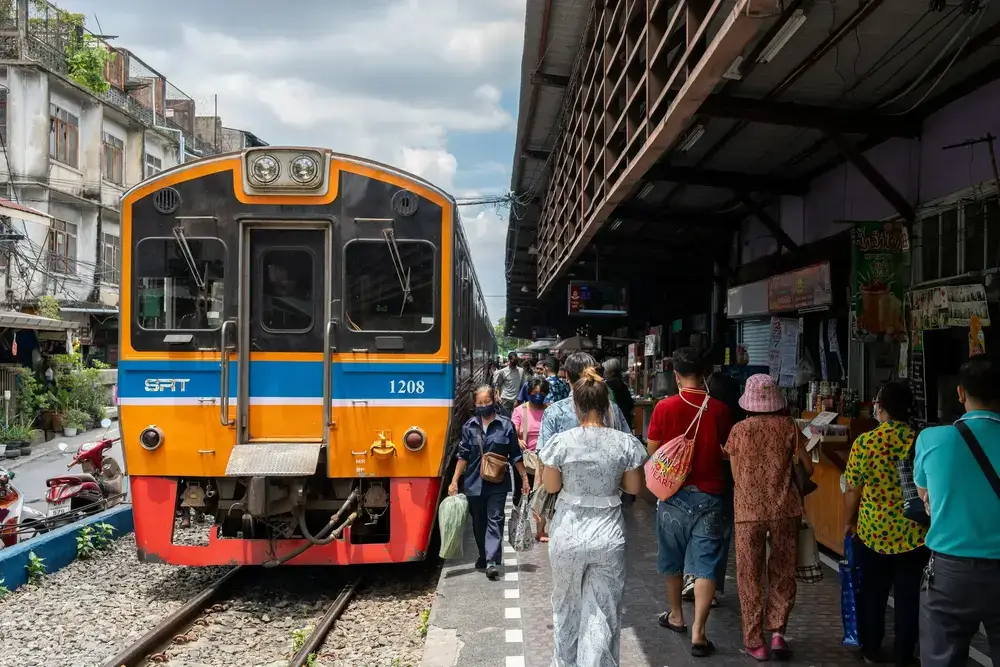
Thailand’s railway network includes several well-known routes that serve both practical transportation needs and sightseeing interests.
| Route | Distance | Duration | Key Highlights | Classes Available | |
|---|---|---|---|---|---|
| Bangkok–Chiang Mai | 751 km | 10–14 hours | Mountains; history; Doi Khun Tan; tribal villages | 1st, 2nd, 3rd, sleepers | |
| Bangkok–Surat Thani | 678 km | 9–15 hours | Beaches, Gulf islands, national parks | 1st, 2nd, 3rd, sleepers | |
| Bangkok–Nong Khai | 624 km | 9–12 hours | Isaan culture, border to Laos, rice fields | 1st, 2nd, 3rd, sleepers | |
| Bangkok–Ubon Ratchathani | 575 km | 9–11 hours | Isaan food, rural temples, border proximity | 1st, 2nd, 3rd, sleepers | |
| Bangkok–Hua Hin | 212 km | 3.5–4 hours | Beach resort town, historic station | 2nd, 3rd | |
| Bangkok–Aranyaprathet | 255 km | 4–5 hours | Rural east, gateway to Cambodia (Siem Reap) | 3rd |
Notes:
• Sleeper trains and air-conditioned berths are commonly used on long-distance routes to destinations such as Chiang Mai, Surat Thani, and Nong Khai.
• Rail travel to Surat Thani is frequently combined with ferry transfers for travel to islands in the Gulf of Thailand.
• The Kanchanaburi line includes the historic Death Railway, associated with World War II and the River Kwai.
• The Eastern Line to Aranyaprathet serves as the main rail connection toward the Cambodian border.
Buy Train Tickets
Use the YesMyTrips widget to reserve your Thai train tickets today!
Compare prices, schedules and routes | Fast confirmation and e-tickets sent to your email.
Booking your Thai train tickets in advance with YesMyTrips guarantees you a seat, especially during peak travel periods or holidays, helping you avoid disappointment due to limited availability. It also allows for better trip planning and access to your preferred departure times and seats.
The train booking was easy. The support was incredibly reactive and helpful. I will definitely book again with them.
Jordan, GBSimple and easy place to book your trip in Asia, used it to travel in Thailand and it was great!
Edwin, GBScenic Train Routes and Experiential Journeys
Thailand’s railway routes wind through a country blessed with stunning landscapes and rich cultural sights, making some lines among Asia’s most photogenic. Here are two of the most scenic journeys:
Bangkok–Chiang Mai (Northern Line):
Often regarded as Thailand’s most picturesque train route, this journey passes through lush rice paddies, deep mountain valleys, jungle-covered hills, and notable sites like Doi Khun Tan National Park, the long Khun Tan Tunnel, and misty bridges. In the early morning, arriving in northern Thailand reveals mist-shrouded fields and tranquil rural villages, particularly striking during the winter months (November–February) and after the rains. Highlights include the iconic Tha Chomphu Bridge with its striking white arches and the Bavarian-style station at Ban Pin, both perfect stops for photography.
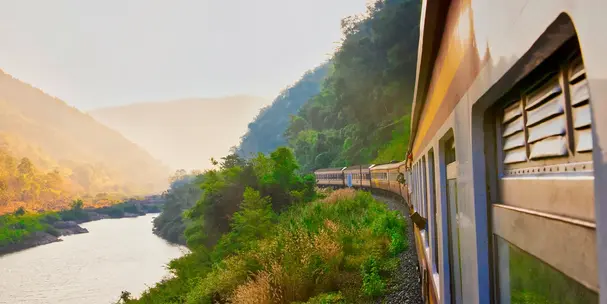
Bangkok–Hua Hin–Surat Thani–Hat Yai( Southern Line):
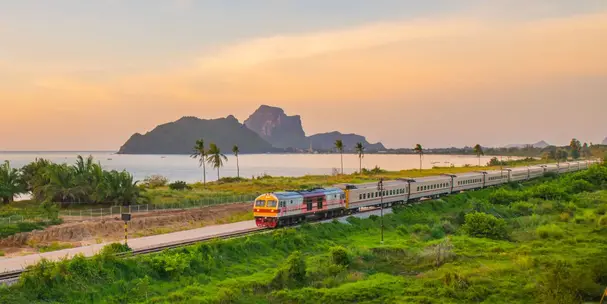
This coastal route offers panoramic views of salt flats, coconut plantations, and sleepy fishing villages as it crosses the Gulf of Thailand. The ornate and historic Thai-Victorian Hua Hin Station stands out as a destination for architecture enthusiasts. Along the way, travelers are treated to stunning vistas of the ocean, palm-lined cliffs, and vibrant sunsets near Surat Thani.
Types of Trains in Thailand
Special Express trains are the fastest long-distance passenger services operated by the State Railway of Thailand, with limited stops between major cities.
• Primary function: Provide rapid connections on Thailand’s main intercity corridors.
• Onboard classes: Air-conditioned first and second class coaches, including sleeping berths on overnight services and reserved reclining seats on daytime trains.
• Main routes: Bangkok–Chiang Mai, Bangkok–Hat Yai, and other high-demand trunk lines.
• Ticketing: Seat and berth reservations are recommended and often required, especially for first class and sleeper accommodation.
• Typical use: Long-distance travel where speed, assigned seating, and comfort are priorities.
Express and Rapid trains operate on medium- and long-distance routes and make more frequent stops than Special Express services, covering a wider range of towns and regional stations.
• Primary function: Serve intercity and regional routes with a balance between travel time and coverage.
• Onboard classes: Second class seating, both reserved and unreserved depending on the service. Sleeper coaches may be available on longer overnight routes. Air conditioning is common on Express trains and less consistent on Rapid trains.
• Main routes: Northern, northeastern, and southern corridors linking regional capitals and provincial centers.
• Ticketing: Reservations are recommended for Express trains. Rapid trains may allow boarding without a reservation when unreserved seating is available.
• Typical use: Intercity and regional travel where moderate speed and lower fares are acceptable.
Classes of Train Seats and Comfort Levels
Thailand’s passenger trains offer multiple seating and sleeping classes, with comfort levels, amenities, and pricing varying by service and route. Understanding the differences between seat and berth classes helps travelers choose suitable accommodation for both short daytime journeys and long overnight trips.
| Class Type | Description | Features | Best For | |
|---|---|---|---|---|
| First Class Sleeper | Private 2-berth A/C lockable cabins (can book entire compartment for solo travel) | Bedside table, power outlet, sink, shared shower, privacy, dining options; best on Special Express trains | Couples, privacy seekers | |
| Second Class Sleeper A/C | Open-plan berths (curtained, upper/lower), A/C, converted at night | Clean bedding, curtains, reading light, power sockets, under-seat storage | Solo, families, budget conscious | |
| Second Class Sleeper Fan | Identical to above but with fans, windows can open | Cheaper option, warmer in summer, older carriages | Backpackers | |
| Second Class Seats (A/C) | Reclining, reserved seats, A/C | Foldable tables, armrests, ideal for day travel | Day trippers | |
| Second Class Seats (Fan) | Reclining padded seats with fans, open windows | Good for short hauls, classic experience | Locals, short trips | |
| Third Class Seats | Wooden or basic benches, fans, open windows | Cheapest, most local, can be crowded/disorderly | Adventurers, locals |
Amenities and onboard features:
• First and second class (air-conditioned) coaches typically provide bedding on sleeper services, including sheets, blankets, and pillows. Additional features may include reading lights, power outlets, and lockable doors in first class or privacy curtains in second class sleepers.
• On many long-distance routes, modern rolling stock introduced in recent years includes newer air-conditioned carriages with improved cleanliness, wider berths, accessible facilities, and designated compartments on selected services.
Basic seating options:
• Third class offers simple seating with bench-style seats, open windows or fans, and a shared carriage environment. These services are commonly used for short-distance travel and provide a view of everyday rail travel used by local passengers.
Ticket Booking and Reservations
Train tickets in Thailand can be booked through official railway channels, online platforms, or in person at stations. Availability, reservation requirements, and ticket formats vary depending on the train type, class, and route.
Where and how to book
• Online booking platforms: Many travelers use third-party websites to view schedules, select seat or berth classes, and pay with international payment methods. Ticket confirmations may be issued digitally or require collection at the station, depending on the service.
• Official SRT website (dticket.railway.co.th): This is the State Railway of Thailand’s official booking system, which generally offers base fares without intermediary fees. Availability and payment processing may vary depending on demand and system load.
• At railway stations: Major stations provide staffed ticket counters, with same-day and advance sales available for many services. Sleeper trains and long-distance routes often sell out in advance, particularly during peak periods.
• By telephone: SRT operates a customer service line (1690) for timetable information and limited reservation assistance. English-language support may be restricted, and operating hours are typically during business times.
Practical Tips and Key Facts
• Advance reservations: Popular overnight routes and sleeper services often sell out several weeks in advance, especially during national holidays and school vacation periods.
• High-demand accommodation: First-class sleepers and lower berths on routes such as Bangkok–Chiang Mai and Bangkok–Surat Thani are among the first to become unavailable.
• Same-day tickets: Availability is usually limited to local, commuter, or third-class services. Long-distance and overnight trains typically require advance booking.
• Tickets and identification: Passengers should carry their ticket confirmation, either digitally or in printed form, along with valid photo identification or a passport matching the name on the reservation.
• Changes and refunds: Ticket changes and cancellations may be permitted subject to fees and timing restrictions. Refund eligibility generally depends on canceling before the scheduled departure time.
• Waiting lists: On certain routes, waitlist systems may be available. Confirmed tickets are issued only when seats or berths become available.
Short checklist before booking
• Confirm your intended route and preferred accommodation (seat or sleeper).
• Book in advance for overnight trains and travel during national holidays or peak periods.
• Ensure passenger names and passport numbers match travel documents exactly.
• Keep a digital or printed copy of your ticket confirmation and payment receipt.
• Review applicable cancellation and refund rules before completing payment.
Understanding Train Schedules and Timetables
Thailand’s train numbering system and timetable structure can appear complex at first but follow a consistent and logical pattern once understood.
Train numbers and service categories:
• Special Express (1–48): Limited stops and the fastest long-distance services.
• Express (51–98): Intercity trains with fewer stops than Rapid services.
• Rapid (101–198): Slower services with more frequent station stops.
• Ordinary (201–300): All-stop trains, typically the slowest category.
• Commuter (301–398): Short-distance services serving Bangkok suburbs and nearby provinces.
• Local (401–498): Provincial and rural services with frequent stops.
Schedules and reliability:
• Timetables: Published schedules include departure times, arrival estimates, journey duration, and stopping patterns.
• Seasonal adjustments: Services may change during national holidays, festival periods, or for special tourist trains. Some scenic trains operate only on specific days or seasons.
• Punctuality: Long-distance services are generally reliable, particularly Special Express and Express trains. Delays ranging from 30 minutes to several hours may occur due to weather, single-track sections, or technical issues.
• Rural and scenic routes: Frequency may be limited, and schedules can change with short notice. Travelers are advised to confirm timings before departure.
Additional guidance:
• Printed timetables: Available at major railway stations and often displayed in English on popular routes.
• Smaller stations: Staff can provide the most up-to-date information on departures and service frequency.
Night Trains and Sleeper Services
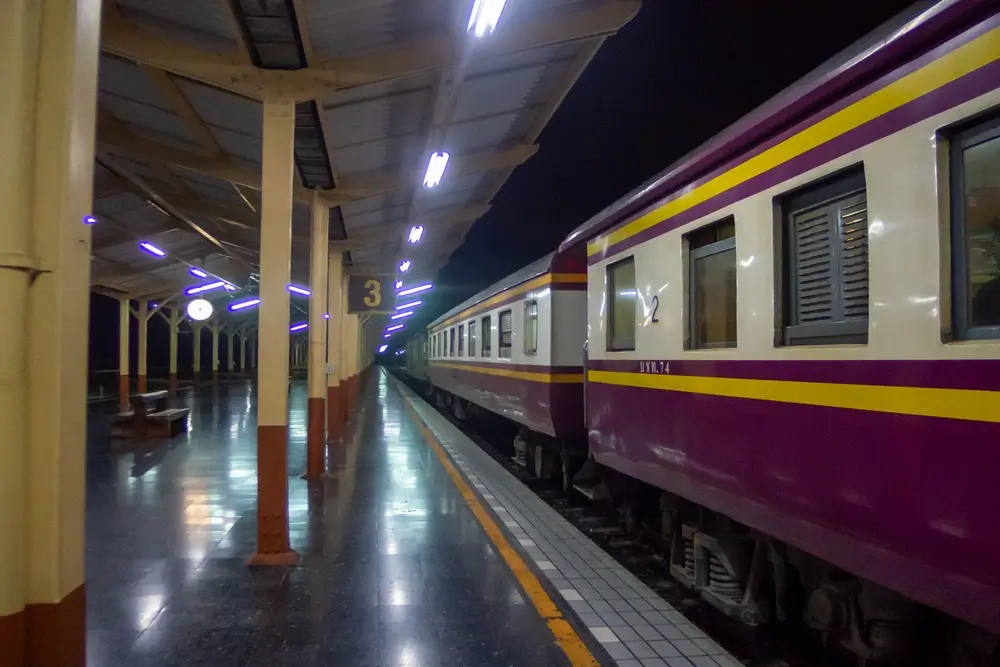
Night trains in Thailand are a practical and popular way to travel long distances, combining overnight transport with basic accommodation. They allow travelers to save time, avoid flights, and experience long-distance rail travel across the country.
Popular Night Train Routes
• Bangkok–Chiang Mai: Several nightly sleeper services using modern Chinese-built CNR carriages as well as older but well-maintained rolling stock.
• Bangkok–Surat Thani: A key route for travelers heading to southern Thailand and nearby islands, with multiple overnight trains offering first and second class sleepers.
• Bangkok–Nong Khai and Bangkok–Ubon Ratchathani: Northeastern routes connecting Thailand to Laos and the Mekong region.
• Bangkok–Hat Yai, Trang, Nakhon Si Thammarat, Kantang, Su-ngai Kolok: Southern routes serving coastal destinations and Malaysia border crossings.
Cabin Types and Booking Tips
• First Class: Private, lockable two-berth cabins with air conditioning. Showers are shared, with hot water available on newer CNR trains.
• Second Class: Open-plan sleeping berths with curtains, available in air-conditioned or fan-cooled coaches. Upper and lower berths are priced differently.
• Third Class: Generally not recommended for overnight journeys due to limited comfort, but still available on some routes.
How to Sleep Comfortably on Night Trains
• Book early, especially if you prefer a lower berth, which is wider, easier to access, and located next to a window.
• Seats are usually converted into beds between 8:00 and 9:00 pm, with clean sheets, blankets, and pillows provided by train staff.
• Bring essentials: An eye mask and earplugs (lights remain on overnight), and a light sweater as air conditioning can be cold.
• Security: Night trains are staffed and patrolled. Keep valuables close, use small locks if needed, and store luggage within reach.
• Food onboard: Most sleeper trains include a dining car or food carts selling Thai meals, snacks, and drinks.
• Arrival: Staff usually provide a wake-up call before your stop. Arrange onward transport in advance, especially at major stations.
Baggage Policy and Practical Onboard Rules
Official luggage allowances on Thai trains are generous, and enforcement is generally flexible. In practice, travelers should focus on keeping luggage manageable, secure, and easy to access during the journey.
| Class | Official Allowance per Passenger (kg/lbs) | Real-world Experience | |
|---|---|---|---|
| First | 60kg / 110lbs | One medium suitcase or bag per berth, plus a daypack, fits easily in cabins. | |
| Second | 40kg / 88lbs | Bags can be stored under lower berths, in overhead racks, or at the end of the carriage. | |
| Third | 30kg / 66lbs | Space under benches or on racks; keep bags within sight for security. |
Practical Tips:
• Bulky items: Bicycles are permitted on some Express and Rapid trains, subject to space availability. A separate freight or baggage ticket may be required. Large suitcases can be difficult to handle in narrow corridors.
• Luggage storage: Use locks or cable ties for bags placed on racks. Keep valuables with you or position your luggage within reach, especially on overnight services.
• Food and drinks: Bringing food onboard is allowed. Vendors frequently board at stations, and passengers may also bring their own meals. Alcohol sales are prohibited onboard trains but may be available at stations during limited hours.
• Smoking: Smoking is strictly prohibited on all trains and in enclosed station areas.
• Mobile connectivity: Mobile signal coverage can be inconsistent in rural or mountainous areas. Power outlets are typically available in newer carriages.
• Pets: Small pets are allowed in third class or baggage cars if properly caged and registered in advance.
• Behavior and quiet zones: Quiet hours are observed on night trains. Passengers are expected to keep noise to a minimum. Daytime travel is generally more social.
Train Safety Tips and Local Culture
Personal and Property Safety
• Valuables: Keep valuables secured or within sight at all times. Use cable locks for bags and carry essential items such as passports, wallets, and phones on your person, particularly when sleeping.
• Onboard security: State Railway of Thailand staff and police patrols are present on many routes, especially overnight and on busy lines. Serious crime is rare, though unattended items may be at risk of theft.
• Health and hygiene: Carry bottled water and light snacks. While train toilets are usually serviceable, bringing personal toilet paper and hand sanitizer is recommended.
Experiencing Thai Railway Culture
• Onboard atmosphere: Thai trains, particularly in second and third class, are often social spaces. Casual conversation, shared snacks, and polite behavior are common and appreciated.
• Food culture: Regional food vendors board trains at stations, offering local specialties that reflect the area you are passing through.
• Staff interaction: Train and station staff are generally helpful. Basic English is commonly spoken at major stations and on long-distance routes.
• Scenery and stops: Many routes pass rivers, markets, temples, and historic sites. Special excursion trains, such as those to Pasak Dam or Kanchanaburi, provide additional cultural insight.
Tips for Enjoying Train Travel in Thailand
• Be patient and flexible: Delays can occur, but they are part of the local travel experience.
• Learn basic Thai phrases: Simple greetings and polite expressions help create positive interactions.
• Embrace the journey: Unexpected moments, local encounters, and changing scenery are often highlights of train travel.
Final Takeaways
Train travel in Thailand is an affordable and practical way to explore the country while gaining insight into everyday life. From overnight sleeper trains to short local routes, the railway network connects cities, regions, and cultures. With basic planning and realistic expectations, travelers can enjoy a safe, comfortable, and memorable journey that becomes part of the travel experience itself.
| Feature | Details | |
|---|---|---|
| Operator | State Railway of Thailand (SRT) under Ministry of Transport | |
| Network | Approximately 4,400 km, spanning 5 main lines | |
| Key Hubs | Krung Thep Aphiwat (Bangkok), Chiang Mai, Hat Yai, Surat Thani | |
| Main Seat Classes | First (private cabins), Second (sleepers/wide seats), Third (benches) | |
| Booking | Online via YesMyTrips and SRT website, at major stations | |
| Timetables/Delays | Generally reliable; delays can occur on single-track sections; schedules may vary seasonally | |
| Night Trains | Available on all major lines, especially popular to north and south routes | |
| Luggage Policy | Official allowances: 60kg/40kg/30kg; enforcement is relaxed; mobility is key | |
| Onboard Food | Dining cars and carts on long routes; vendors at smaller stops | |
| Safety | Generally excellent; staff present, rare crime incidents | |
| Cultural Experience | Local vendors, markets, spontaneous conversations, and warm Thai hospitality |
Frequently Asked Questions
Yes! The easiest way is through YesMyTrips.com, which offers a secure, user-friendly platform to browse routes, select classes, and book tickets in advance. You can also purchase tickets at train stations or by phone, but online booking provides confirmation by email and seat selection.
Most major credit and debit cards are accepted on YesMyTrips.com, making it convenient for travelers worldwide. You can also use some e-wallets like Apple or Google.
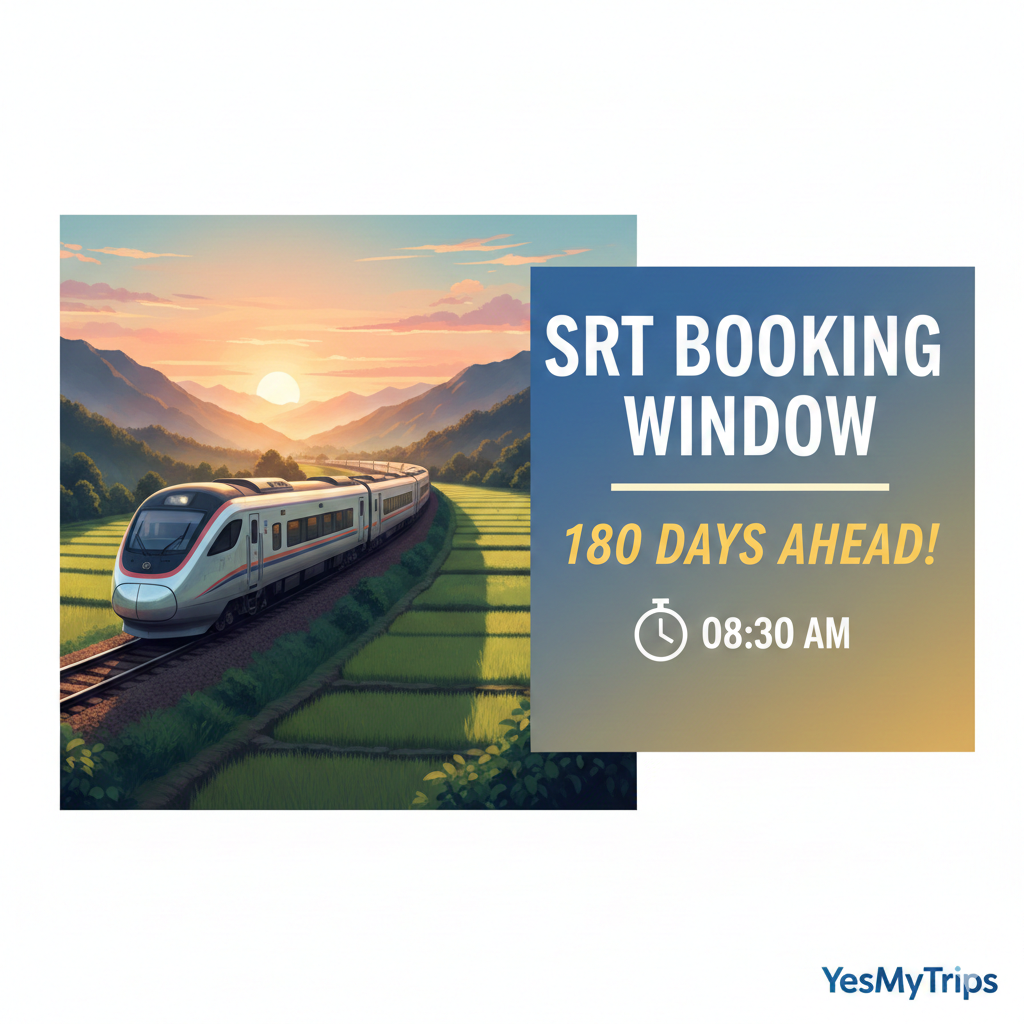
You can book tickets up to 6 months ahead on YesMyTrips.com, especially for popular sleeper train routes, making it ideal for planning peak-season travel. Options include reclining seats, sleepers with private cabins, and luxury first-class sleepers.
Thailand trains offer First Class sleepers (private cabins), Second Class (air-conditioned or fan sleeper berths, reserved seats), and Third Class benches. Check YesMyTrips.com for availability.
Ordinary trains stop at all stations and are slower, while Rapid and Express make fewer stops for quicker travel. Special Express trains are the fastest, with limited stops and more amenities, early booking on YesMyTrips.com is recommended.
Popular routes include Bangkok–Chiang Mai (scenic Northern Line), Bangkok–Surat Thani (for islands), and routes to Kanchanaburi and Ubon Ratchathani. You can check schedules and scenic options through YesMyTrips.com.
Prices vary by route and class, with the cheapest option being Third Class benches. On YesMyTrips.com, you can often find discounts and promotions to save money. Follow us on Facebook to stay informed about the latest deals and offers.
Sleepers are designed for comfort, with bedding, linen, privacy curtains, and sometimes air conditioning. Some trains also have toilets or dining cars.
Dining cars and carts serve meals and snacks on long routes. You can also bring your own food and drinks, but alcohol sales are limited to stations.