













The cabin 6-berth sleeper on Vietnam Railways
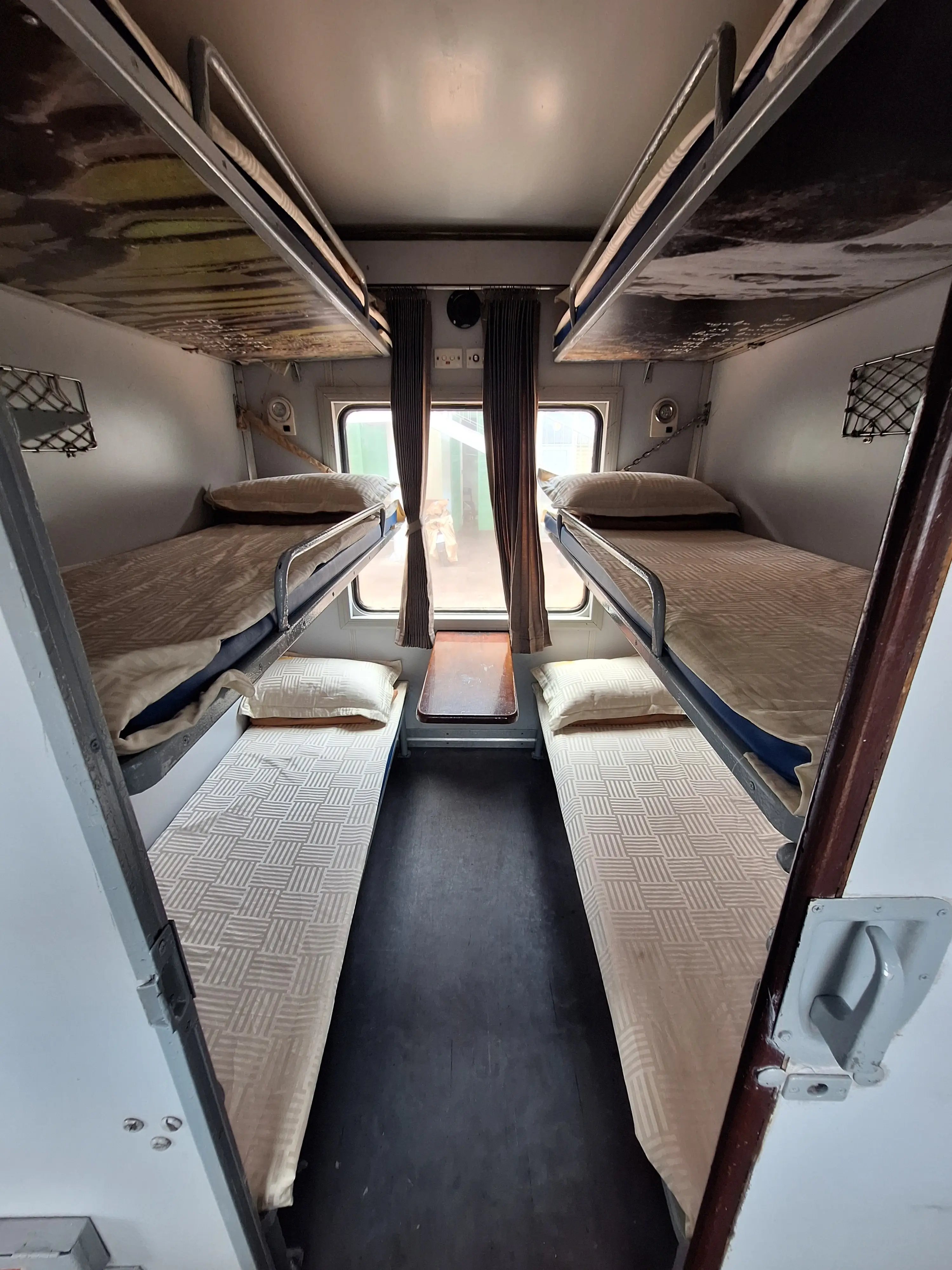
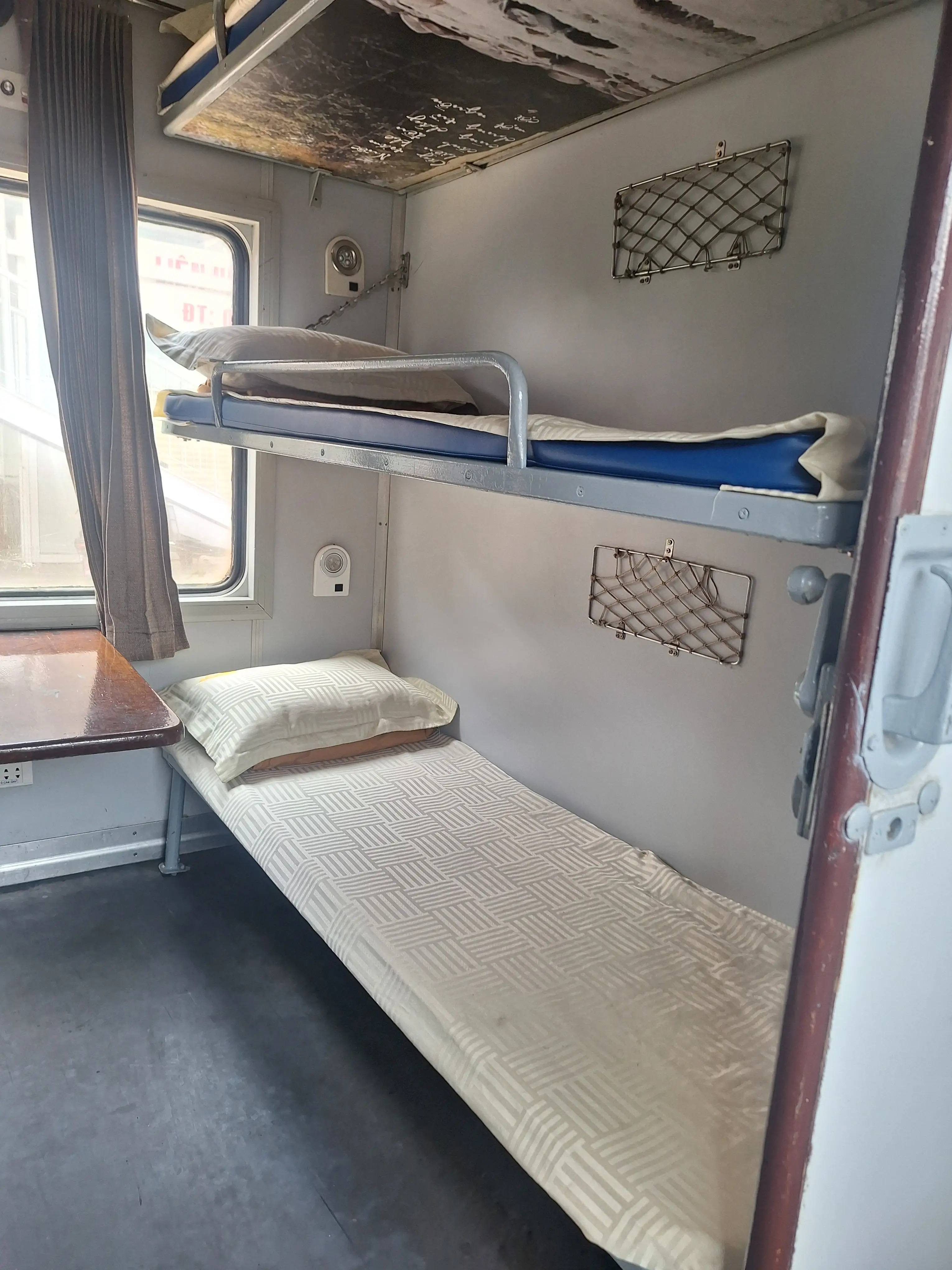
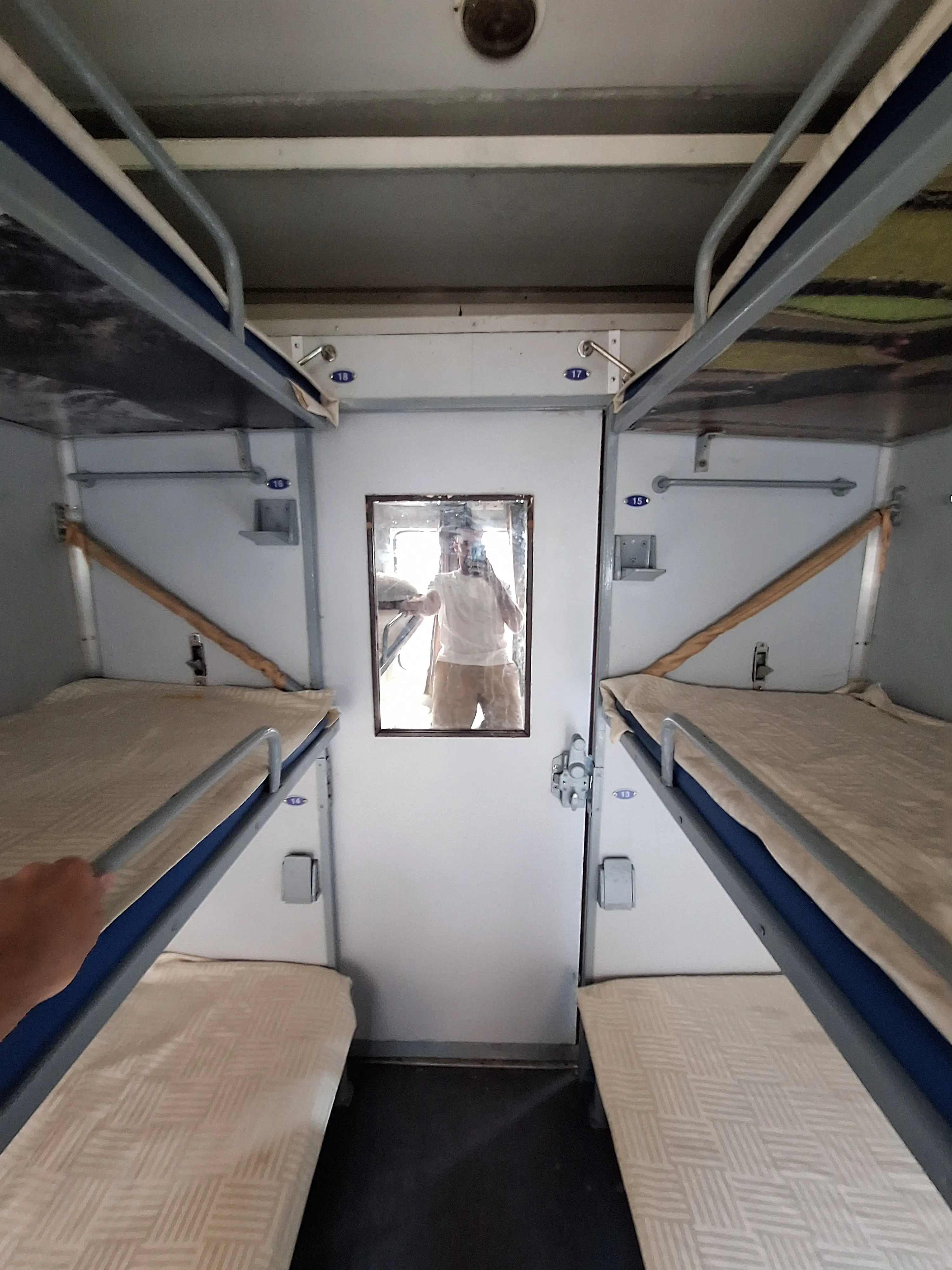
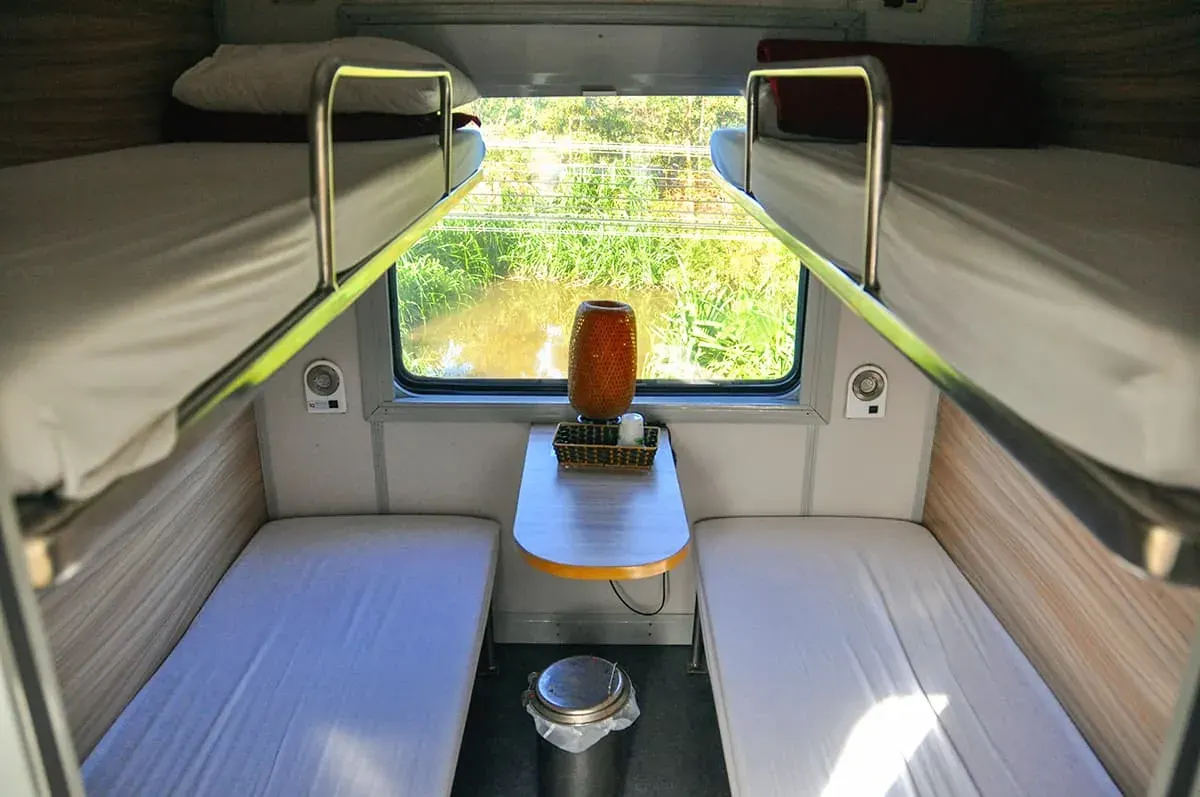
The 6-berth cabin sleeper, Vietnamese khoang 6 giường nằm, also called the "hard sleeper", is the most affordable sleeper class on Vietnam Railways. It is an enclosed private compartment holding six beds, arranged as two facing columns of three-tier bunks (lower, middle and upper berth on each side).
Key Amenities:
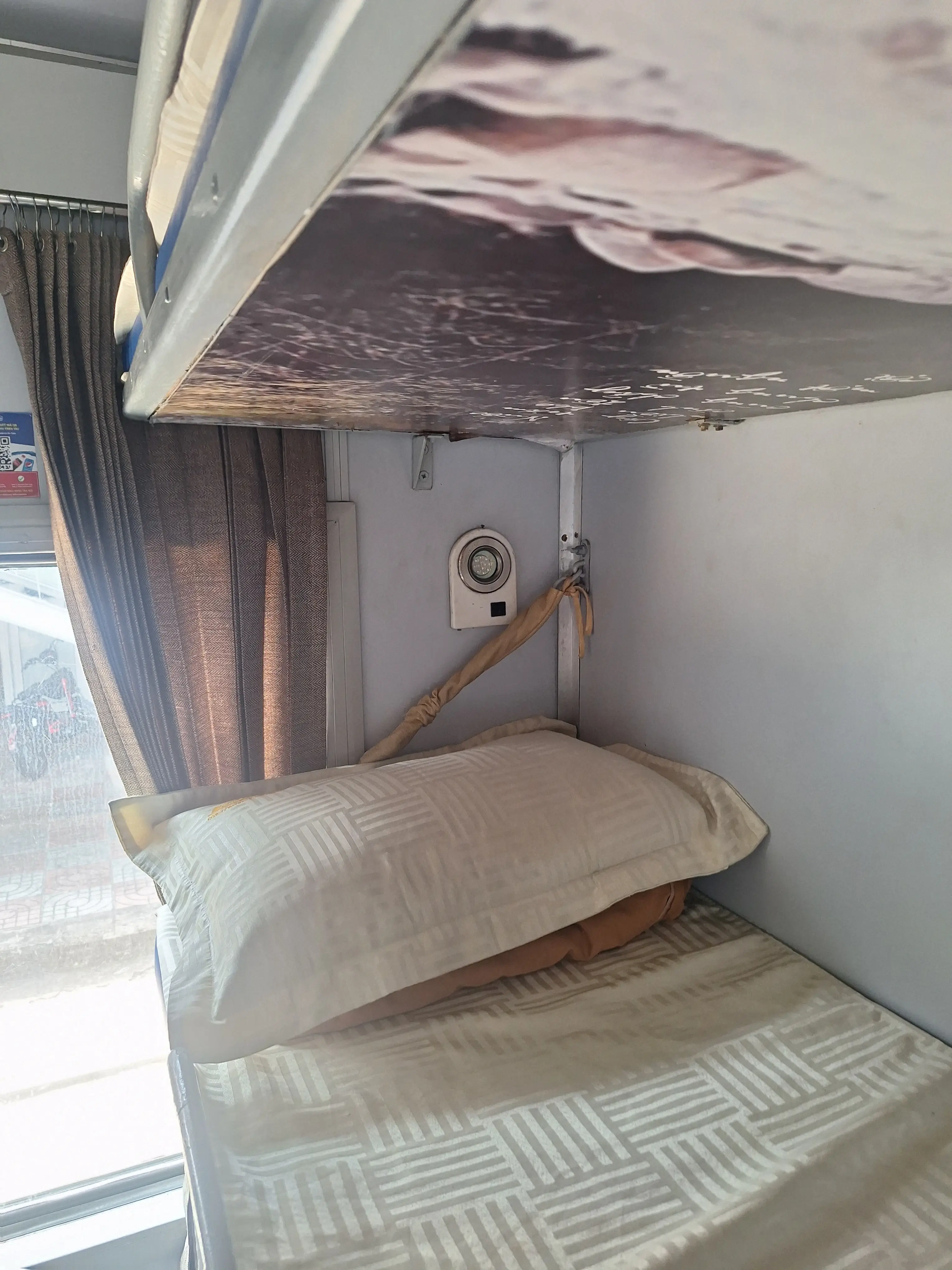
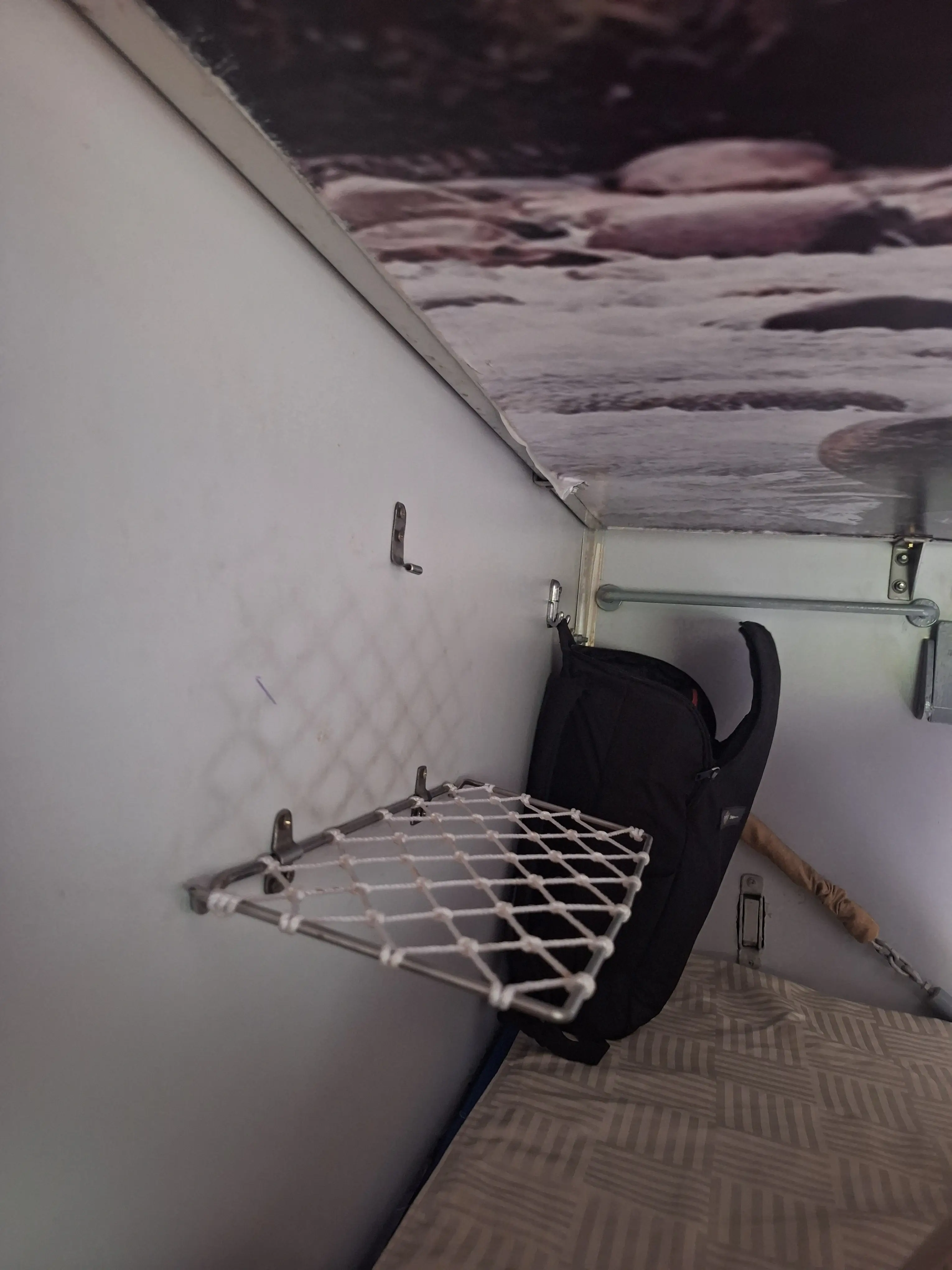
• In-berth features: Individual reading light, fold-down mesh storage shelf, mattress, pillow, clean sheets, and blanket.
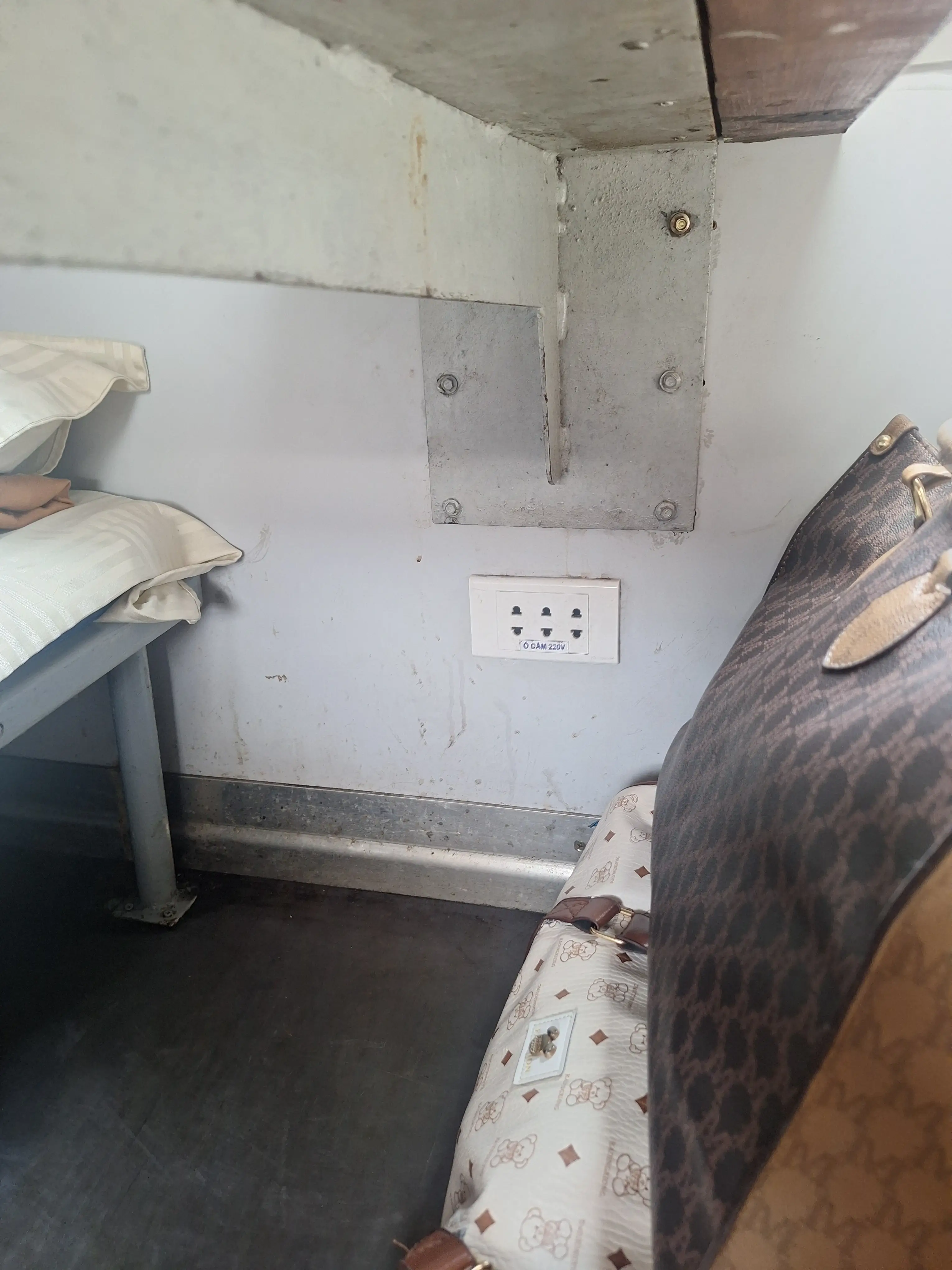
• Shared cabin features: Air conditioning, sliding privacy door, small central table, and a 220V power socket located under the table.
Berth Selection & Price: Lower berths offer the most headroom and easiest access at a slightly higher price, while upper berths are the cheapest with limited vertical space. It is the best-value choice for groups of up to six traveling overnight along the Reunification Express routes, including
Ho Chi Minh,
Nha Trang,
Da Nang,
Hue,
Hanoi, and
Sapa (Lào Cai).
Reserve your 6-berth cabin
Use the YesMyTrips widget to reserve your Vietnamese train tickets today!
Booking your Vietnamese train tickets in advance with YesMyTrips guarantees you a seat, especially during peak travel periods or holidays, helping you avoid disappointment due to limited availability. It also allows for better trip planning and access to your preferred departure times and seats.
| Class | 6-berth sleeper / hard sleeper (Vietnamese: khoang 6 giường nằm) |
|---|---|
| Beds per cabin | 6, in an enclosed compartment with a sliding door |
| Layout | Two facing columns of 3 berths: lower (tầng 1), middle (tầng 2), upper (tầng 3) on each side |
| Air conditioning | Yes, throughout the compartment |
| On each berth | Mattress, pillow, blanket, clean sheets, individual reading light, fold-down mesh storage shelf |
| In the cabin | Table by the window, 220V power socket |
| Price order | Lower berth = most expensive · middle = mid-price · upper = cheapest |
| Best for | Families and groups of up to 6; budget travellers wanting a flat bed |
| Booking window | Up to 44 days before departure |
| Available on | Reunification Express and most long-distance Vietnam Railways routes |
| Book online | YesMyTrips.com |
Below: what the cabin looks like, which berth to book, its amenities, prices, and how to reserve.
Tap any photo to zoom. Swipe or use the arrows to browse.
Book Vietnam train tickets online
YesMyTrips books Vietnam Railways (VR) tickets for routes across Vietnam. The total price, including all fees, is shown before you pay. Your ticket is sent as a PDF by email once our team confirms the booking. Payment by Visa, Mastercard, JCB or American Express card, Apple Pay or Google Pay.
Search trains in VietnamYesMyTrips is a Southeast Asia train booking service founded by Maxence Décamp, a French specialist running train booking operations in the region since 2019. Operated by YES MY TRIPS Co., Ltd. (Vietnam), member of EuroCham Vietnam and CCI France Vietnam.
What is the 6-berth sleeper cabin?
Each compartment is a small private room closed by a sliding door. Inside, the berths are arranged in two columns of three: three beds on the left, three on the right, facing each other across a narrow aisle. Think of it as two sets of triple bunk beds sharing one room.
That layout is the whole appeal: with six beds, a family or group of friends can book the entire compartment and have a private space for the night, something a plane or a bus can't offer for the money.
Which berth is best: lower, middle or top?
Berths are priced by level, from bottom to top:
- Lower (tầng 1) The one everyone wants: you are able to sit, window right there, and you can charge your phone while laying on your berth. Most comfortable and priciest.
- Middle (tầng 2) The practical middle ground, cheaper than the bottom, more headroom than the top, a little privacy.
- Top (tầng 3) The cheapest of the three. Trade-off is the climb and limited sitting space near the ceiling.
My advice: travelling with young kids, older relatives, or anyone who'd rather skip the ladder, book the lower berths. Just there to sleep and saving money? The middle and top do the job for less.
Watch: inside the 6-berth sleeper
A quick tour of the cabin: the layout, the three berth levels, and what it's like on board.
What amenities does the 6-berth cabin have?
- Bedding Pillow, blanket and clean sheets on every berth
- Lighting An individual reading light per bed
- Air conditioning The whole compartment stays cool through the night
- Table A table by the window and fold-down mesh storage shelf for each berth
- Power 220V sockets (usually under the table) for phones and cameras
- Luggage Plenty of room under the lower berths for large suitcases, plus space for smaller bags along the floor up to the cabin door.
It isn't luxury, the 4-berth soft sleeper is roomier and a touch plusher but for the price difference, most travellers find the 6-berth more than good enough.
What is the rest of the carriage like?
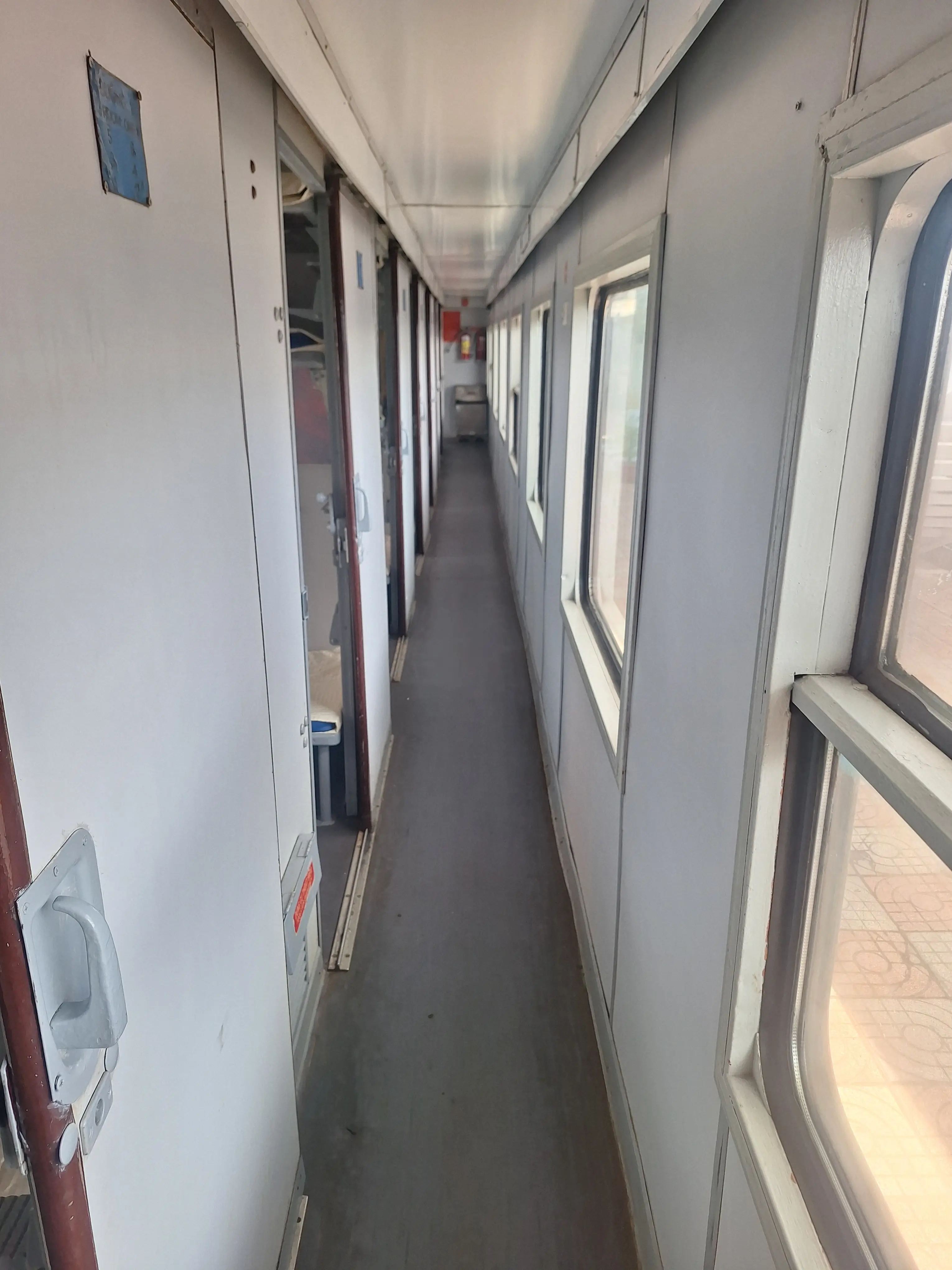
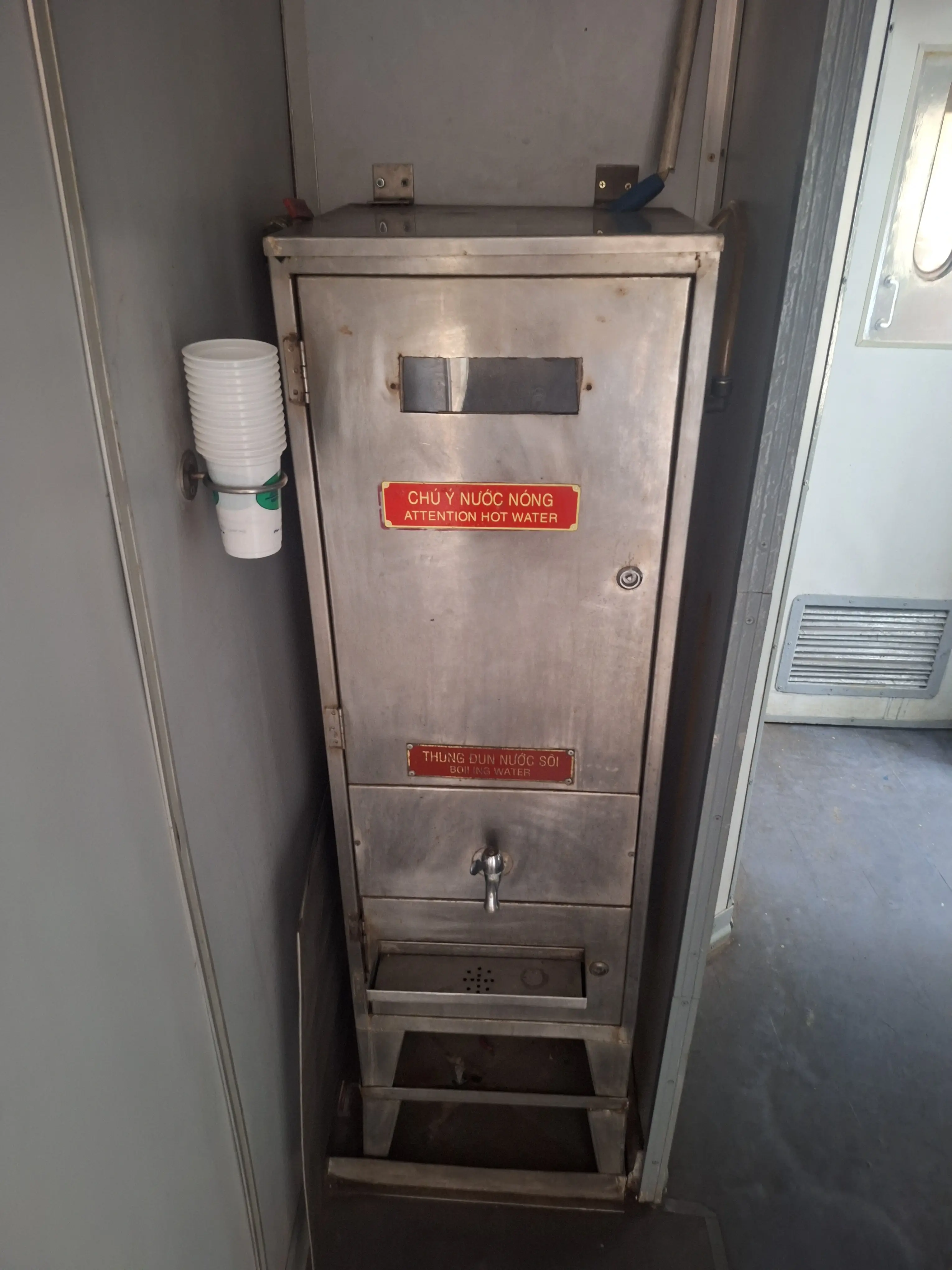
Beyond the compartment, the sleeper carriage has a corridor running along one side, a washroom and toilet at each end, and a hot-water point for tea and instant noodles. Here's a look at the wagon itself.
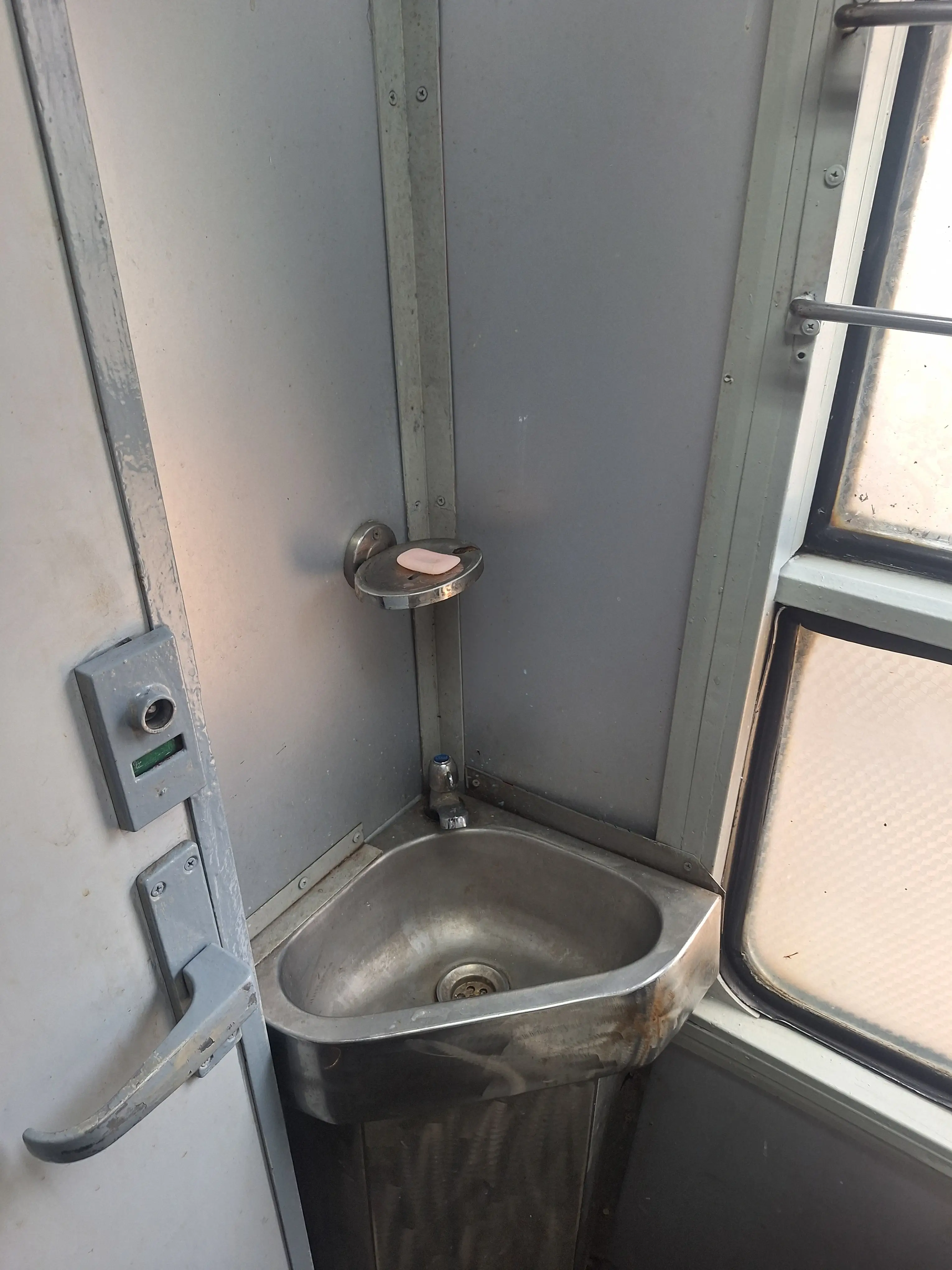
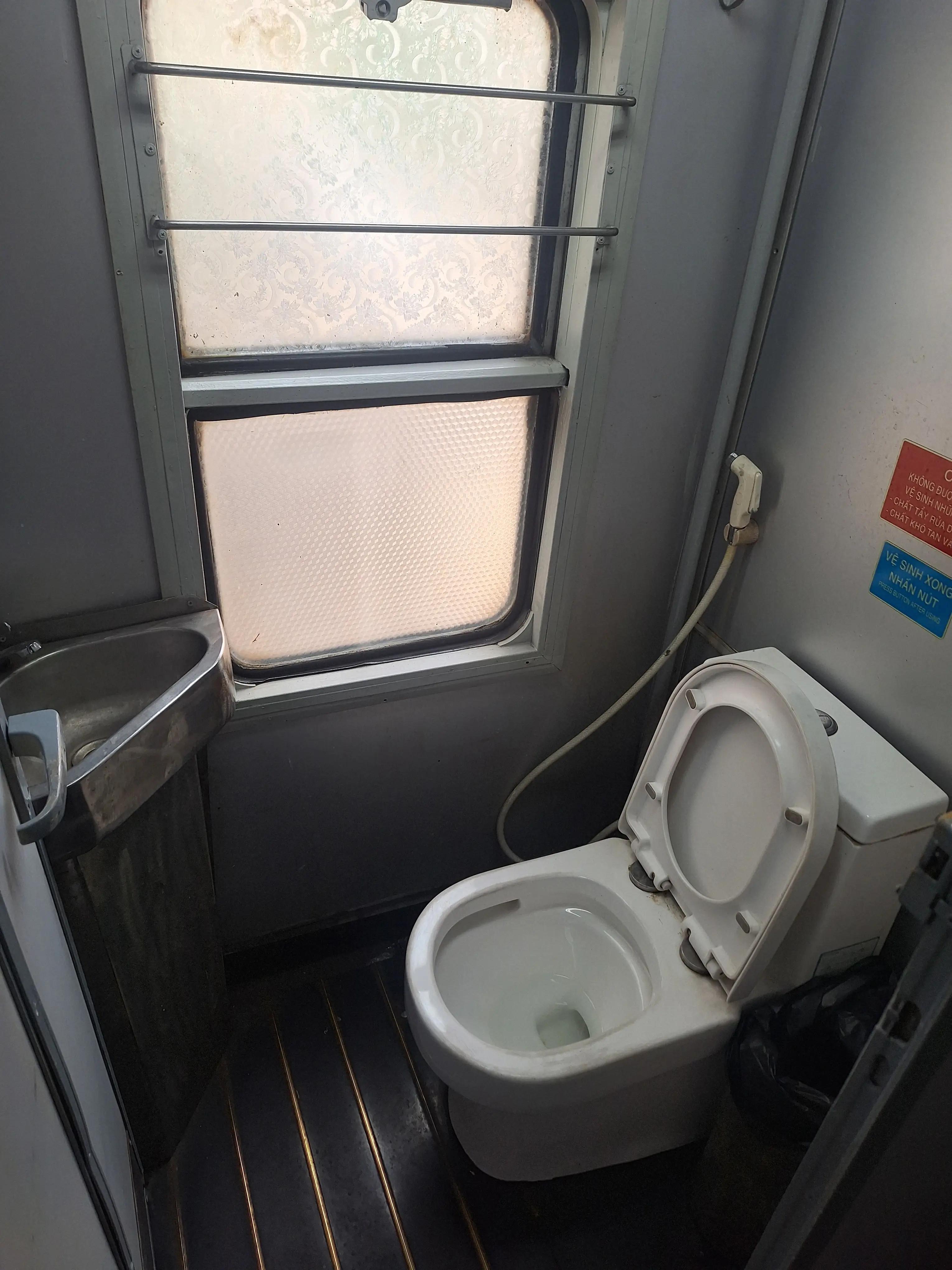
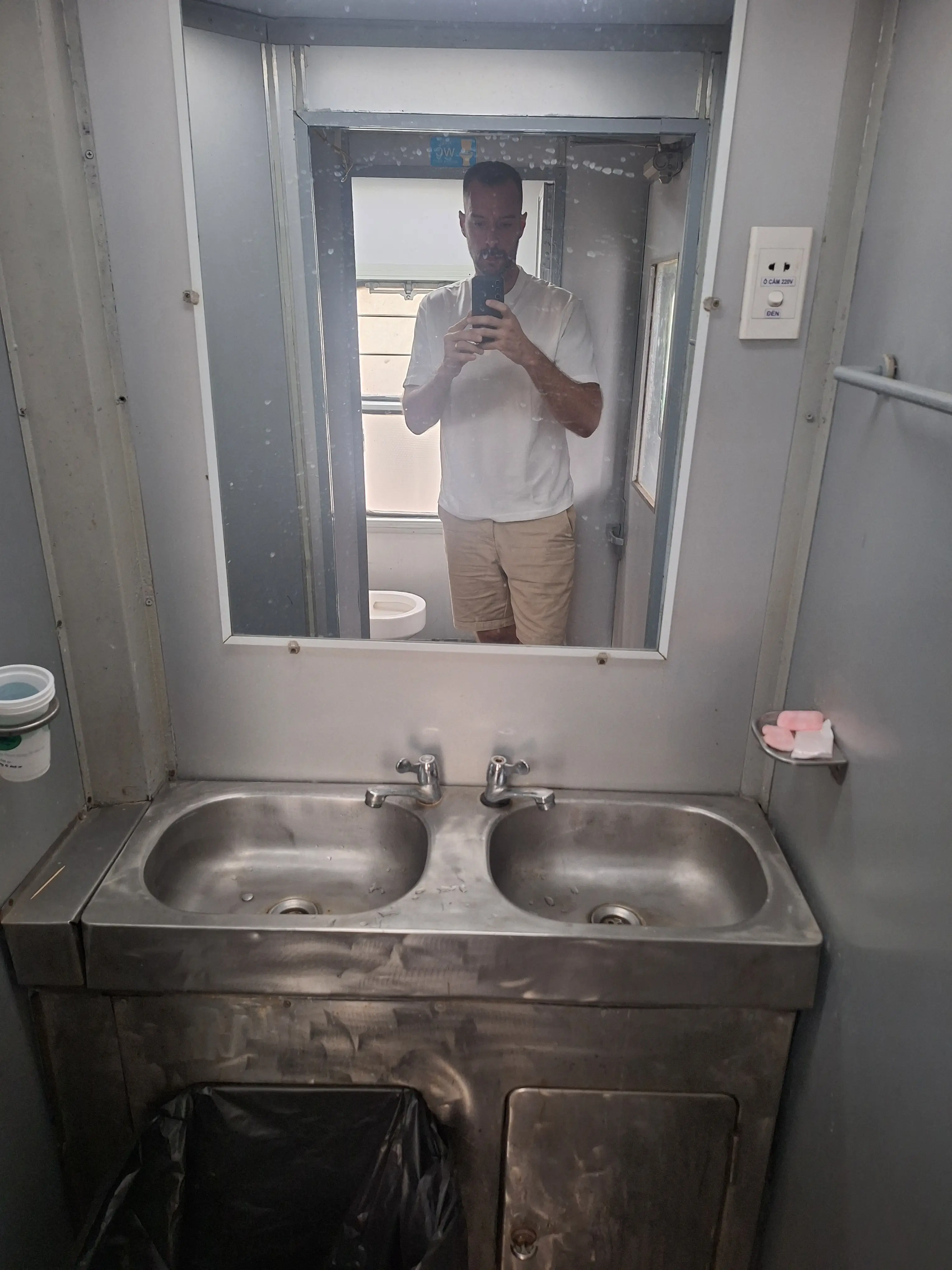
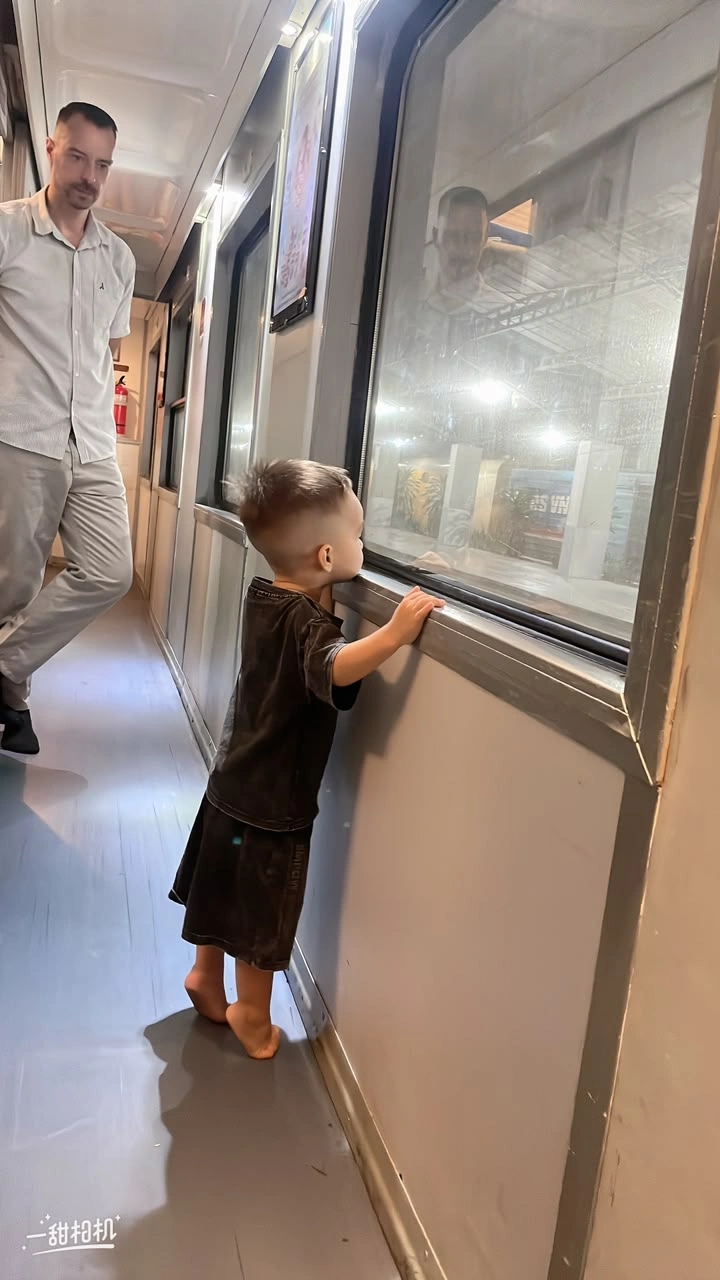
Tap any photo to zoom. Swipe or use the arrows to browse.
Who is the 6-berth sleeper best for?
The 6-berth makes the most sense for families and groups of up to six who can take the whole compartment privately; for budget travellers who want a real bed rather than a reclining seat; and for solo travellers or couples who don't mind sharing and want the cheapest way to lie flat overnight. If privacy matters most, the 4-berth or 2-berth cabins are worth the upgrade.
What is the 6-berth sleeper actually like? (my experience)
I've taken this cabin many times, most recently on the roundtrip between Ho Chi Minh and Nha Trang on July 13th and 17th, 2026. A few honest, first-hand notes that go beyond the spec sheet:
- The mattress is comfortable Despite the "hard sleeper" name, the mattress is genuinely comfortable, the label refers to the ticket class, not to how the bed feels.
- It can get cold The air conditioning is sometimes freezing, and the blanket alone may not be enough. I'd bring a light jacket and warm socks so you're not woken up shivering.
- The berth is long enough for tall travellers I'm 190 cm and can lie fully flat, the berth is roughly 192 cm long.
- Middle and upper berths are a climb The gap between the middle and upper berth is tight, so pulling yourself up there is awkward if you're tall. If you're tall, less mobile, or travelling with older relatives, book a lower berth.
- Bring a power strip or multi-plug adapter Each cabin only has one to three electrical outlets. If you are traveling as a group or family with multiple phones and power banks to charge, bring a multi-plug power adapter or a small power strip.
Food on board vs bringing your own
The food the staff serve is fine, I'd give it about 6/10, price is reasonable. Throughout the journey, staff will pass by the cabins multiple times pushing a food and beverage trolley. Keep an ear out for them calling out down the hallway, and just pop your cabin door open to flag them down. Typical onboard prices:
| Small bottled water | ~15,000 VND (~US$ 0.58) |
|---|---|
| Instant noodles | ~15,000 VND (~US$ 0.58) |
| Rice with tofu, meat & tomato | ~60,000 VND (~US$ 2.32) |
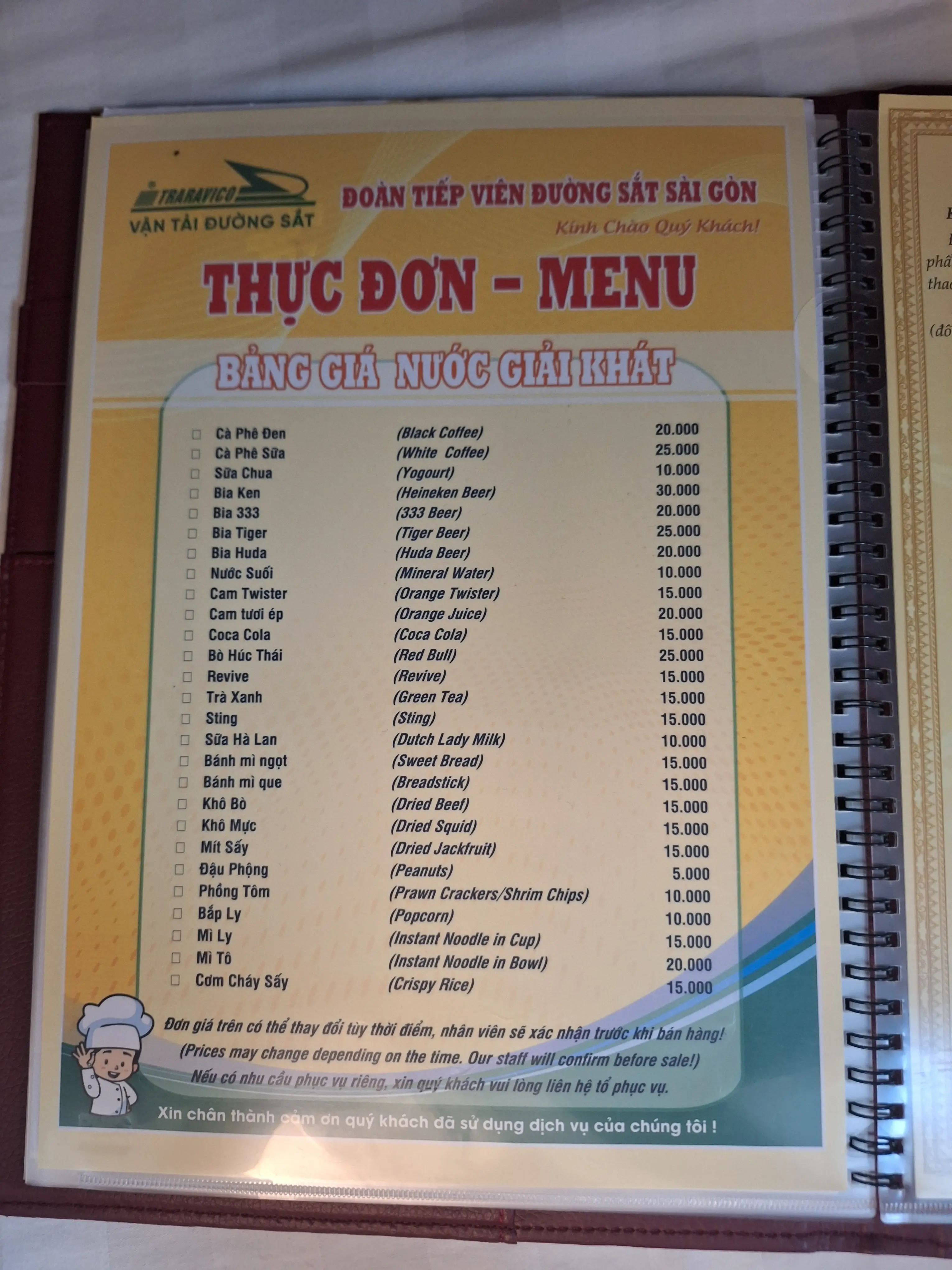
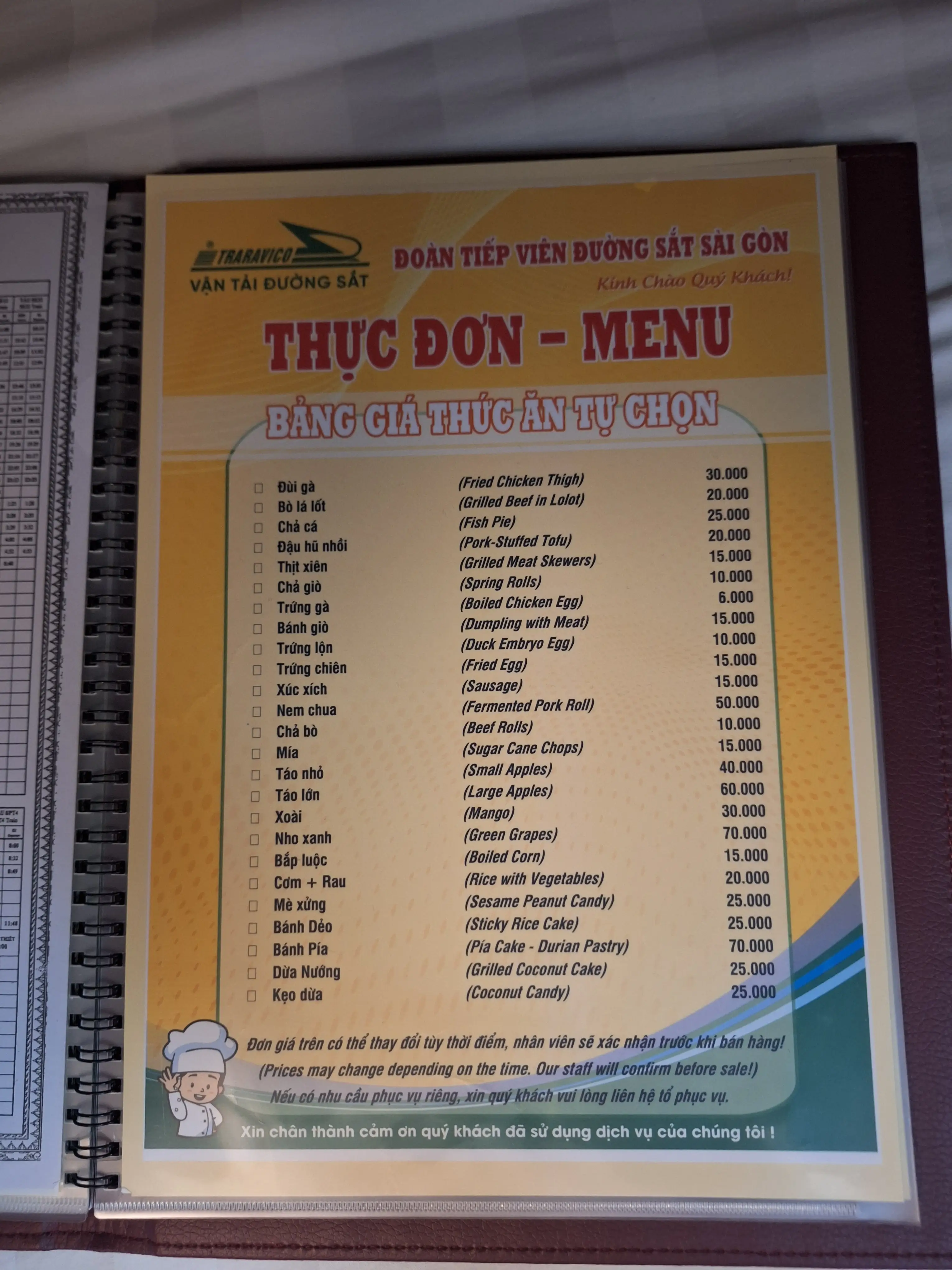
Tap the menu to zoom in.
Vietnam Railways is completely fine with you bringing your own food, so don't hesitate to pack a meal or snacks. Station kiosks tend to match the onboard trolley on both price and quality, so the real savings come from buying street food before you board. Just keep in mind that strongly scented foods, especially durian, are strictly forbidden anywhere on the train.
How much does a 6-berth ticket cost?
The 6-berth is the cheapest sleeper on the train, always less than the 4-berth soft sleeper on the same service. Fares scale with distance, so a short overnight hop costs far less than an end-to-end run, and the lower berth carries a small premium over the upper one. For the exact live fare on your date and route, check YesMyTrips.
Sample Ticket Prices for 6-Berth Cabins
Ticket prices for 6-berth sleeper cabins (hard sleeper) vary based on route distance and berth tier. Lower berths offer the most convenience and headroom, while upper berths are the most budget-friendly. Prices also vary depending on the train schedule and the specific cabin position within the carriage, so the rates below are provided to give a general idea of the cost difference between lower, middle, and upper berths.
| Route | Lower Berth (Tier 1) | Middle Berth (Tier 2) | Upper Berth (Tier 3) |
|---|---|---|---|
| Ho Chi Minh City ↔ Nha Trang | ~889,920 VND (~US$ 34.37) | ~751,680 VND (~US$ 29.03) | ~649,040 VND (~US$ 25.06) |
| Hanoi ↔ Da Nang | ~1,899,720 VND (~US$ 73.36) | ~1,757,160 VND (~US$ 67.86) | ~1,549,800 VND (~US$ 59.85) |
| Da Nang ↔ Hue | ~262,440 VND (~US$ 10.13) | ~238,680 VND (~US$ 9.22) | ~216,000 VND (~US$ 8.34) |
| Hanoi ↔ Ho Chi Minh City | ~2,036,880 VND (~US$ 78.66) | ~1,882,440 VND (~US$ 72.70) | ~1,661,040 VND (~US$ 64.15) |
Which routes have the 6-berth sleeper?
The 6-berth runs on the Reunification Express and most long-distance services. The overnight legs travellers use most are:
- Hanoi ↔ Huế / Đà Nẵng A long northern leg through the mountains, ideal as an overnight.
- Đà Nẵng ↔ Nha Trang Coastal scenery by day, restful by night.
- Nha Trang ↔ Ho Chi Minh City A comfortable overnight into the south.
- Hanoi ↔ Lào Cai The gateway to Sapa, and one of the most popular sleeper routes in the country.
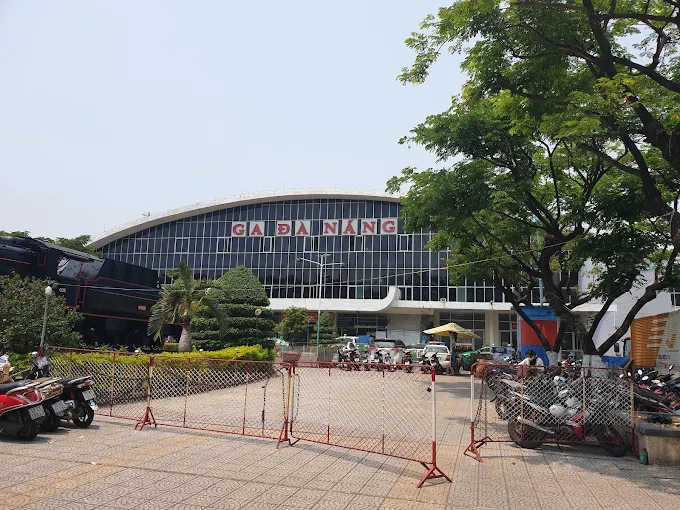
- Đà Nẵng ↔ Huế The Hai Van Pass in daylight. Book Da Nang to Hue train tickets or Hue to Da Nang train tickets.
How far in advance can you book?
Exceptional update: reservations are open on every Vietnam Railways route through February 25, 2027, well beyond the usual 44 day booking window.
Tickets typically open up to 44 days before departure. Sleeper berths, especially lower ones, sell out first on popular routes, and the whole network fills weeks ahead around Tết (Vietnamese New Year), so book early.
6-berth sleeper: frequently asked questions
What is the 6-berth sleeper on Vietnam Railways?
It is the most affordable sleeper class on Vietnam Railways: an enclosed private compartment with six beds, arranged as two facing sets of three-tier bunks. It is air-conditioned, with bedding and a reading light on every berth, a folding table and a 220V power socket.
How many beds are in a 6-berth cabin, and how are they arranged?
Six. They sit in two facing columns of three, a lower, middle and upper berth on each side of the compartment, like two triple bunk beds sharing one room.
Which berth is best?
The lower berth (tầng 1) is the most comfortable, you can sit and it has the window but it is the most expensive. The upper berth (tầng 3) is the cheapest but involves a climb. The middle (tầng 2) sits in between on both price and comfort.
Is the 6-berth cabin air-conditioned, and are there power sockets?
Yes to both. The whole compartment is air-conditioned, and there is a 220V power socket (usually under the folding table) to charge phones and cameras overnight.
Can a family get the whole cabin to themselves?
Yes. If your group books all six berths, the compartment is private. Groups of up to six are the ideal fit; smaller parties may share with other passengers unless they book all the berths.
How far in advance can I book, and how much does it cost?
Tickets usually open up to 44 days before departure. The 6-berth is the cheapest sleeper on the train and always costs less than the 4-berth soft sleeper; fares scale with distance. Check live fares and availability on YesMyTrips.com.
Book your 6-berth sleeper
Trains open for reservation 44 days ahead of departure, and lower berths on popular routes sell out first. Check live schedules, pick your berth, and reserve in a few clicks.
Search trains on YesMyTrips →
Related Articles
 Guide to Train Travel in Vietnam
Your ultimate guide to train travel in Vietnam, everything you need to know!

 How to Book Vietnam Train Tickets
Check out our full guide to booking train tickets in Vietnam in 2026!
 Vietnam Train Routes, Prices & Timetable
Compare fares and full timetables for every major Vietnam route, then book directly.
 Vietnam Sleeper Trains
Compare overnight sleeper routes, live fares and cabins, and book your berth online.
 Family Cabin on Vietnam Sleeper Trains
Book all 4 berths of one cabin so your family travels behind one door, with tips for the night.
 Da Nang to Hue Train
Cross the Hai Van Pass in under three hours, with live schedules and seat side tips.
 Hoa Phuong Do Luxury Train
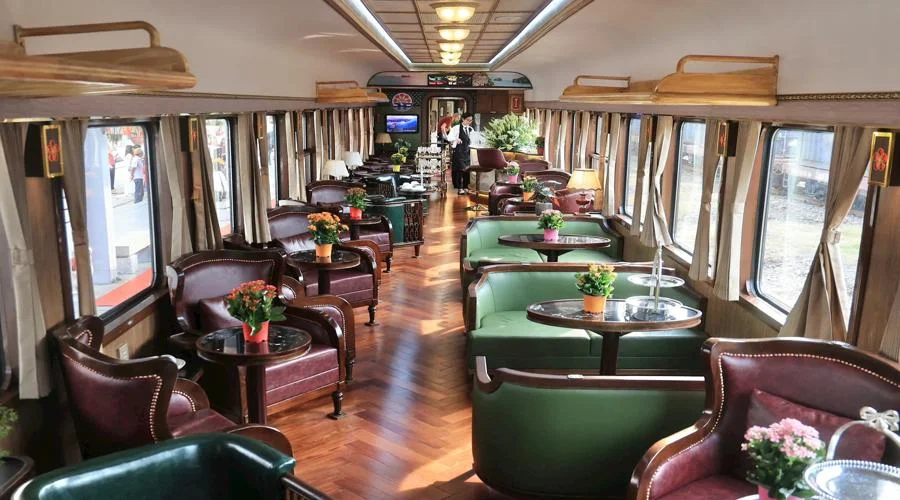
Ride the Salon Club Class VIP carriage from Hanoi to Hai Phong, with live times and fares.
 VR Ticket Booking Window
Check if booking is open for your date, live, with a countdown and free email alerts.