













Vietnam sleeper trains 2026 guide
The overnight sleeper train is the classic way to travel Vietnam by train. Vietnam Railways runs three sleeper cabins on every long route: the 6-berth hard sleeper, the 4-berth soft sleeper and the private 2-berth VIP cabin. Compare routes, cabins and live fares, and book a berth in minutes.
Overnight sleeper train routes in Vietnam
Vietnam Railways runs sleepers the length of the 1,726 km north to south line and on the northern branch to Sapa. These are the overnight sleeper train routes travellers book most. Tap a route for live times and fares.
| Route | Classes | Duration | ||
|---|---|---|---|---|
| Hanoi - Ho Chi Minh City | 6-berth4-berth2-berth |
33h to 41h | Check seats | |
| Hanoi - Hue Most booked |
6-berth4-berth2-berth |
13h to 14h | Check seats | |
| Hanoi - Da Nang | 6-berth4-berth2-berth |
15h to 18h | Check seats | |
| Ho Chi Minh City - Nha Trang | 6-berth4-berth |
8h to 9h | Check seats | |
| Ho Chi Minh City - Da Nang | 6-berth4-berth2-berth |
17h to 18h | Check seats | |
| Hanoi - Lao Cai (Sapa) * | 4-berth2-berth |
8h | Check seats |
* There is no station in Sapa itself. The line ends at Lao Cai, about 35 km away, then a short road transfer climbs to the town.
Lower berths sell out first
On popular legs and around Tet, sleeper cabins fill weeks ahead and the lower berths go first. Book early, or message us and we will alert you when your date opens.
Sleeper cabins: hard sleeper, soft sleeper & VIP
Every sleeper train in Vietnam offers three cabin types. All three are air-conditioned. The 4-berth soft sleeper is the choice of most international travellers, and a lower berth is worth booking first.
6-Berth Hard Sleeper
An enclosed compartment with a sliding door and six berths in two facing tiers of three. "Hard" means a thinner mattress, not a board. Priced by level: lower dearest, middle mid, upper cheapest.
4-Berth Soft Sleeper
Four berths in two tiers, a lockable door, thicker mattress, reading lights and a small table. The tourist default.
2-Berth VIP Cabin
Two berths only, maximum privacy, upgraded bedding and in-cabin power. On the newest VNR cars and private tourist carriages.
Prefer to sit rather than sleep? See our full guide to Vietnam train classes for soft seat and seat options on daytime services.
Sleeper cabins & fares at a glance
Below are the three sleeper cabins and a quick overview of the class. Fares scale with distance and cabin, and within the 6-berth by berth level. For the exact price on your date, run a live search.
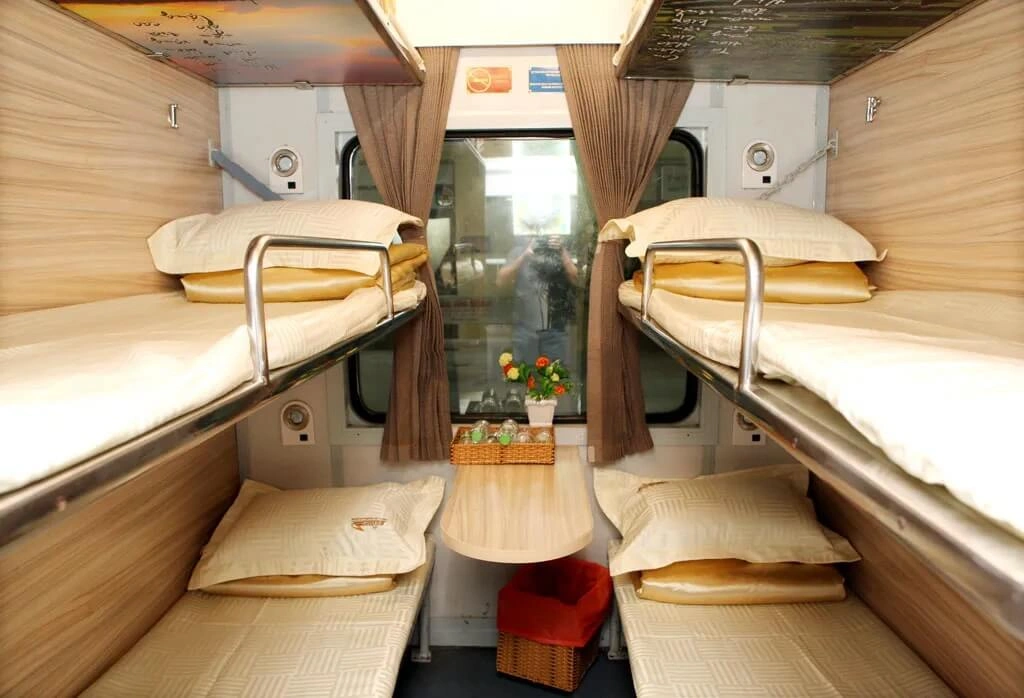
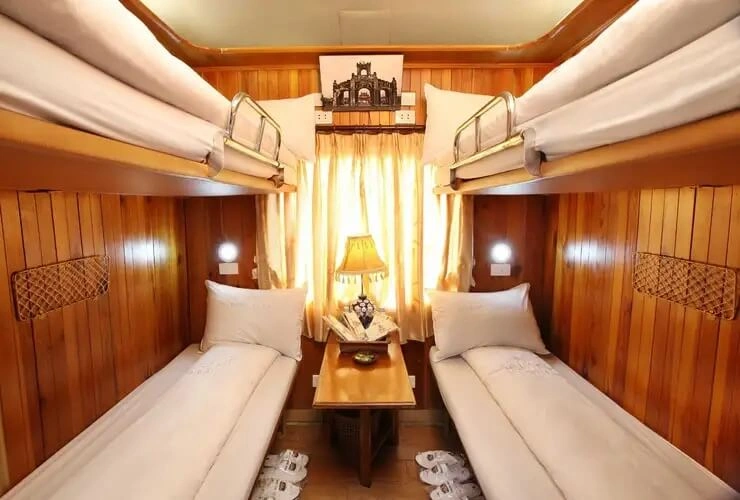
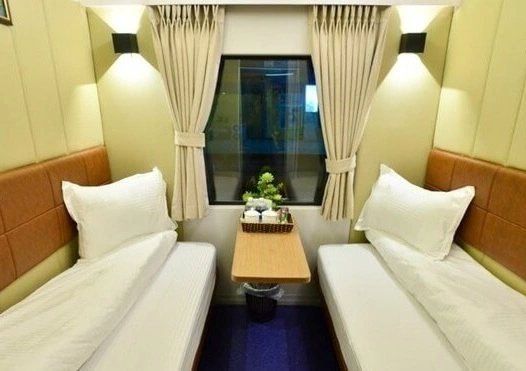
Tap any image to zoom.
| Class | Sleeper (giường nằm): 6-berth hard sleeper, 4-berth soft sleeper, 2-berth VIP cabin |
|---|---|
| Beds per cabin | 6, 4 or 2, in an enclosed compartment with a sliding door |
| Air conditioning | Yes, on every sleeper cabin |
| On each berth | Mattress, pillow, blanket, clean sheets and an individual reading light |
| In the cabin | Table by the window and a 220V power socket |
| Price order | 6-berth by level: lower dearest, middle mid, upper cheapest. 4-berth and 2-berth are priced per berth |
| Operated by | Vietnam Railways (DSVN), plus private carriages on the busy tourist routes |
| Best for | Overnight legs on the north to south line and the Hanoi to Lao Cai (Sapa) route |
| Booking window | Up to 44 days before departure |
| Available on | Reunification Express and most long-distance Vietnam Railways routes |
| Book online | YesMyTrips.com |
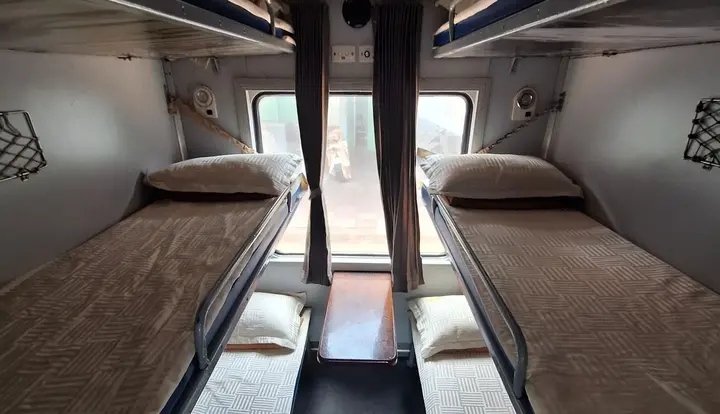
Standard vs luxury sleeper trains in Vietnam
There is one railway and one track. Private operators lease upgraded carriages onto the same Vietnam Railways trains, so the schedule and arrival time are identical, and only the cabin interior and service differ.
Standard Vietnam Railways
Refurbished VNR carriages on the SE, SNT and SP trains. Clean, air-conditioned, good value, with 6-berth, 4-berth and, on the newest stock, 2-berth cabins. Perfectly comfortable for a night.
Luxury & Private Carriages
Operators such as Livitrans, Violette Express and Lotus Train run wood panelled 4-berth and private 2-berth cabins on the busy tourist legs, with softer mattresses, in-cabin power and welcome kits, at a higher fare.
What a night on a Vietnam sleeper train is like
Bedding & air conditioning
Every berth has a mattress, clean sheet, pillow and blanket, and the whole compartment is air-conditioned. Berths are about 192 cm, long enough for tall travellers. The AC can turn cold overnight, so bring a layer or warm socks.
Power & Wi-Fi
A 220V socket sits in each cabin, usually under the table, but there may be only one to three, so a small power strip helps if you are charging several devices. Wi-Fi is rarely available, so download what you need first.
Food & drink
A trolley passes with hot meals, noodles, drinks and snacks, and each carriage has a free hot water point for tea and instant noodles. You can bring your own food, but strongly scented items, especially durian, are not allowed onboard.
Toilets & hygiene
Toilets sit at the ends of each carriage. Newer and private cars have Western style toilets kept cleaner over the run. Bring tissues, wipes and hand sanitizer.
Luggage
The allowance is around 20 kg per passenger, stored under the lower berths, on the shelf above the door, or with you in a private cabin. Keep valuables in sight.
Safety
Trains are one of the safer ways to travel Vietnam. Every compartment has a sliding door; lock a 4-berth or 2-berth, or book a whole 6-berth as a group, to keep the cabin to your own party.
Why travel Vietnam by train
Save a hotel night
An overnight berth covers your accommodation and your transport in one, so the sleeper often works out cheaper than a flight plus a hotel.
Wake up somewhere new
Board in the evening, sleep through the miles, and arrive in the morning with a full day ahead instead of losing daylight hours to travel.
The Hai Van Pass
The coastal stretch between Hue and Da Nang is the most photographed section of the whole railway. Choose a service that crosses it in daylight.
Lowest carbon
Of the overnight options, the train has by far the smallest footprint, well below a flight or a long-distance coach.
Travellers on the sleeper train in Vietnam
Unusual because I'm actually giving 5star for giving a refund! However my fault, I booked the wrong train. The adviser was so helpful, clearly explaining how the refund would happen, any cancellation charges and how long it would take. It all happened as they said - no complaint.
The WhatsApp support is very fast and efficient. I believe this is unique, I don't remember seeing see anywhere else. I booked my train in Vietnam and I highly recommended!
Vietnam train booking: reserve a sleeper
Booking a sleeper berth online takes a couple of minutes, with no Vietnamese SIM or account needed. Here is what to know before you reserve.
When tickets open
Seats generally open up to 44 days before departure. Book early for a sleeper, and well ahead over Tet, when the whole network fills weeks in advance.
Which berth to pick
Go for a 4-berth soft sleeper and a lower berth where you can. In the 6-berth cabin the lower berth has the most headroom and a window.
How you get your ticket
Pay by international card and your ticket arrives as a QR code by email. Show it on your phone at the station, no printing needed.
Exceptional update: reservations are open on every Vietnam Railways route through December 30, 2026, well beyond the usual 44 day booking window.
Sleeper train Vietnam: quick answers
Are sleeper trains in Vietnam safe?
Yes. Trains are one of the safer ways to travel in Vietnam. Keep valuables close. Every compartment has a sliding door, and you can lock a 4-berth or 2-berth cabin, or book a whole 6-berth as a group, to keep it to your own party.
Are there different sleeper trains in Vietnam?
Yes. Standard cabins are run by Vietnam Railways, while private operators lease upgraded carriages onto the same trains on busy tourist routes. The schedule is identical, so you are choosing the cabin and service level, not the departure.
What is a hard sleeper on a Vietnam train?
The hard sleeper is the 6-berth cabin: an enclosed compartment with a sliding door and three tiers of bunks on each side. "Hard" refers to the thinner mattress, not a wooden board, and it is still air-conditioned. It is the cheapest sleeper, priced by level, with the lower berth dearest and the upper cheapest. See our full 6-berth cabin guide for photos and berth by berth tips.
How long is the Hanoi to Da Nang train?
The Hanoi to Da Nang train takes about 15 to 18 hours over roughly 791 km, which makes it a natural overnight sleeper. Da Nang is also the gateway to Hoi An, about 30 km south of the station.
How far in advance can I book a Vietnam sleeper train?
Tickets typically open up to 44 days before departure. Lower berths sell first on popular routes, and the network fills weeks ahead around Tet, so book early.
Do all sleeper cabins have air conditioning and power?
Every sleeper cabin is air-conditioned, including the 6-berth hard sleeper. Power sockets are at or near the berth on refurbished and private carriages. Cabins run cold overnight, so bring a layer.
Is there a train to Sapa?
Not directly. The line ends at Lao Cai, about 35 km from Sapa. Take the overnight Hanoi to Lao Cai sleeper, then continue by road up to the town.
Can I book a whole sleeper cabin to myself?
Yes. Book every berth in a cabin and it is yours: a 2-berth for a couple, or a whole 4-berth or 6-berth for a family or group. Otherwise you may share the free berths with other passengers.
How do I receive my ticket?
Your ticket is delivered as a QR code by email. Show it on your phone at the station; there is no need to print anything, and no Vietnamese SIM or phone number is required to book.
Book your Vietnam sleeper train
Live availability, real seat maps, official VNR e-ticket by email. About two minutes.
Find tickets ↑ Written and kept up to date by Maxence, founder of YesMyTrips.
 Related Articles
 Guide to Train travel in Thailand
Your ultimate guide to train travel in Vietnam, everything you need to know!

 How to Book Vietnam Train Tickets
Check out our full guide to booking train tickets in Vietnam in 2026!
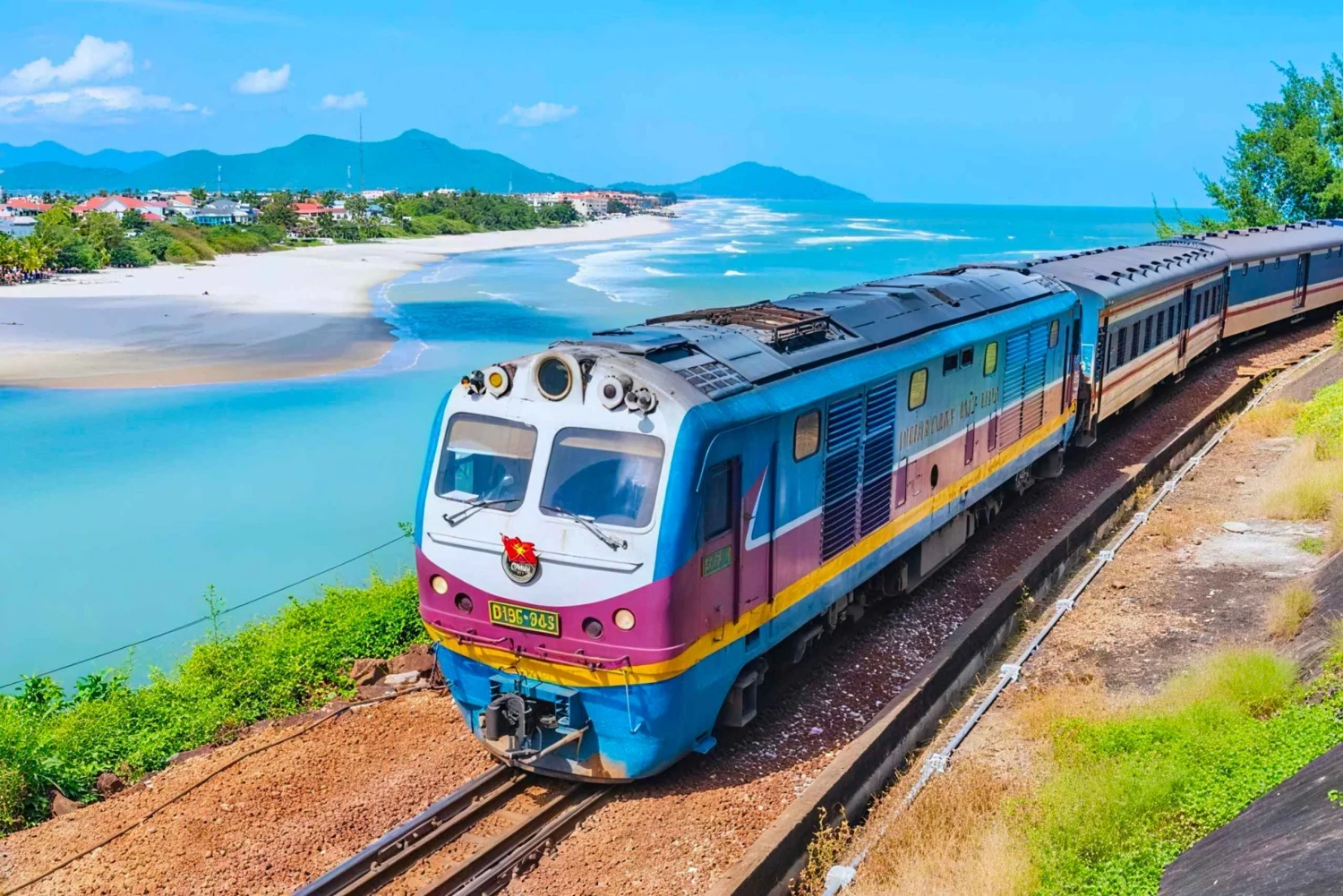 Vietnam Train Routes, Prices & Timetable
Compare fares and full timetables for every major Vietnam route, then book directly.
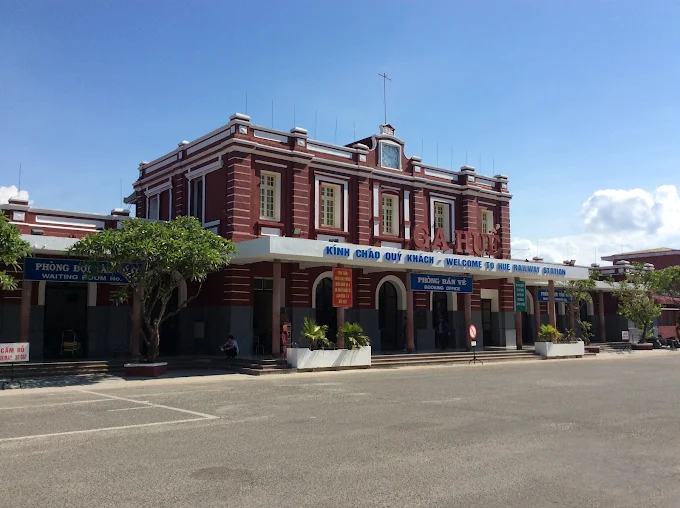
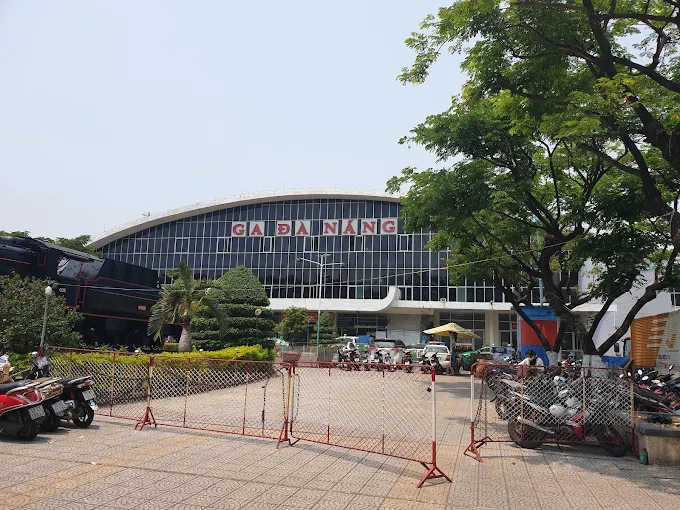 Da Nang to Hue Train
Cross the Hai Van Pass in under three hours, with live schedules and seat side tips.
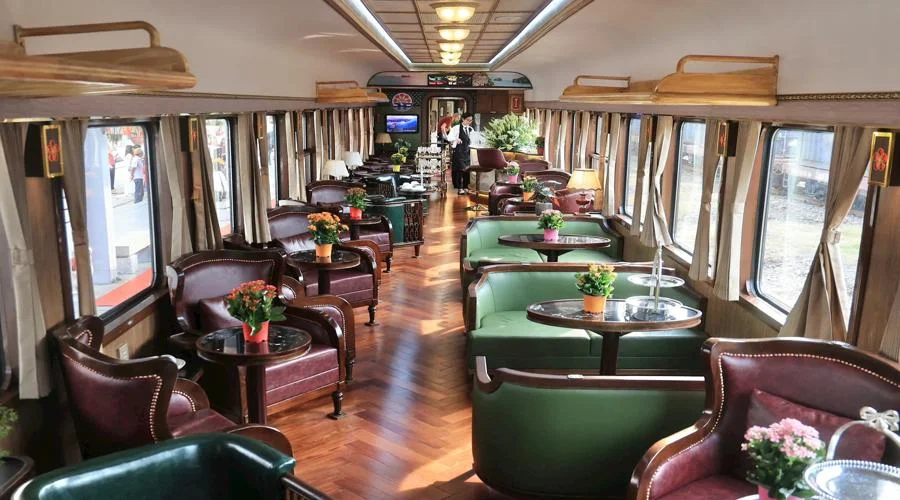 Hoa Phuong Do Luxury Train
Ride the Salon Club Class VIP carriage from Hanoi to Hai Phong, with live times and fares.
 VR Ticket Booking Window
Check if booking is open for your date, live, with a countdown and free email alerts.